

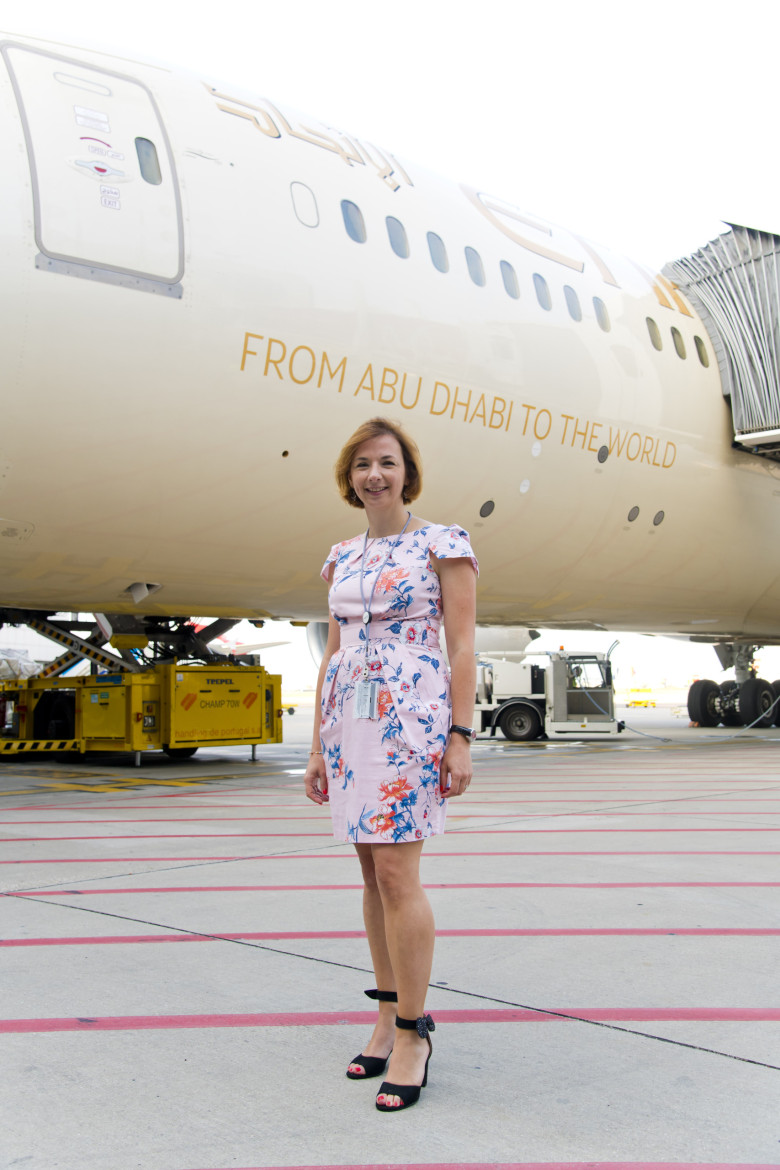
Air Service One talks with, Alexandra Malvezin, Head of Business Development & Marketing, Toulouse Blagnac Airport
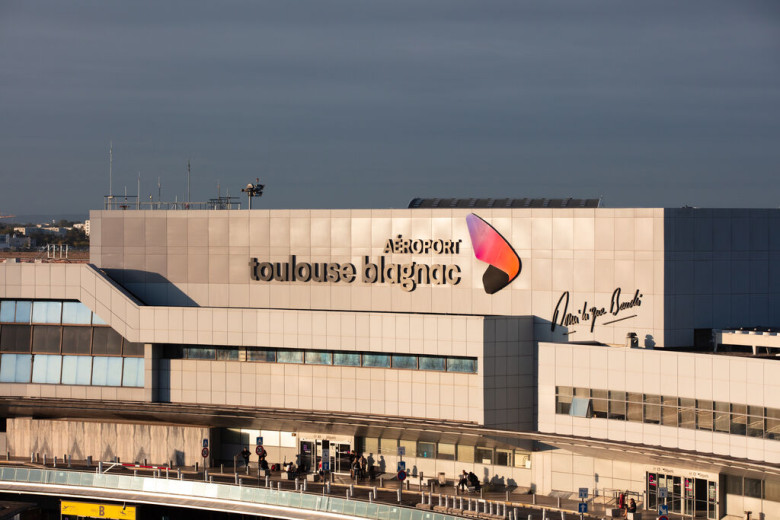
Toulouse Blagnac Airport is strengthening its international network. The arrival of new long-haul services, including United Airlines’ year-round link to Washington Dulles, alongside increased investment from carriers such as Volotea, easyJet, Transavia and Corsair, is strengthening the airport’s position.
With a large and affluent catchment area, a globally important aerospace industry and further opportunities across Europe, North America and Asia, Toulouse believes its network still has considerable room to grow.
Air Service One sat down with Alexandra Malvezin, Head of Business Development and Marketing at Toulouse Blagnac Airport to discuss its recent growth, long-haul ambitions and priorities for future network development.
Toulouse Airport handled 7.6 million passengers in 2025, while the second quarter of 2026 saw traffic return to growth, increasing 3.5%. How would you assess the airport’s traffic performance so far this year, and what are your expectations for the full year?
Airport traffic is indeed extremely dynamic across all geographic segments and market categories:
- Growth in the outbound leisure market, driven by the arrival of a second Volotea-based aircraft and further expansion by Transavia (year-round service to Dakar), easyJet (new routes to Marrakech and Gatwick), and Ryanair.
- Growth in the international segment, with the launch of Corsair services to Réunion Island, while the Canadian market remains extremely dynamic, with additional frequencies operated by Air Canada using its XLR aircraft.
- Continued growth on a key route for TLS: Paris, with more than 25 flights per day today, and capacity continuing to stimulate demand.
We expect a positive result for 2026, although some uncertainties remain regarding the evolution of demand during winter 2026/27.
The airport is offering around 81 destinations with 27 airlines in 2026, while international seat capacity for the summer season is up 5.2%. Which destinations or geographical markets are now at the top of Toulouse Airport’s route development wish list?
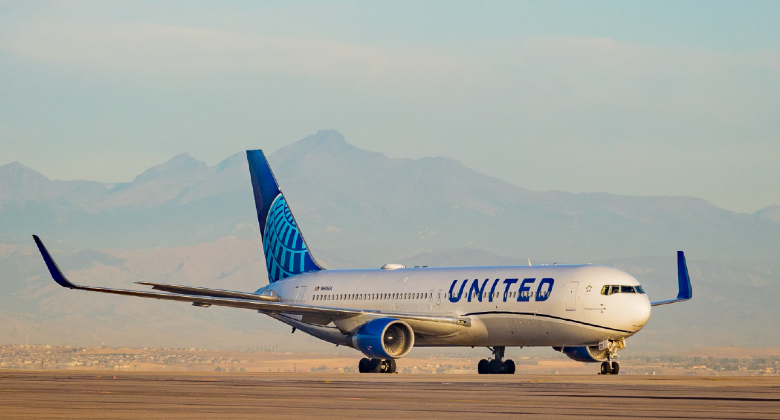
The big news is that one of TLS’s priority markets, the US, is now a reality from S27 onwards, with the arrival of United Airlines.
Joking aside, we continue to work on a number of development opportunities out of TLS.
- On the short- and medium-haul segment, we continue to identify network gaps that represent genuine development opportunities for airlines. Greece, for example, is a major topic for us, alongside Tunisia and Turkey. The number of seats available from TLS to these markets remains significantly lower than what is offered from other regional airports in France. This is difficult to understand when you consider that Toulouse has the highest proportion of CSP+ population in France after Paris — and therefore one of the strongest concentrations of high purchasing power.
- To meet the still extremely strong business demand, Switzerland, the UK and Germany are priority development markets.
- The UK in particular is a key area of discussion with a number of airlines, given the large British community living in our region.
- In the long-haul segment, our objective is to further improve connectivity to Asian markets — Japan, India and others — as well as Oceania, particularly to meet the needs of businesses in our region, with the aerospace industry being a key driver.
- Toulouse is also a major tourism destination. It is notably a gateway to a significant share of France’s UNESCO World Heritage sites and was named by Lonely Planet as one of the world’s best cities to visit in 2025. It is also worth highlighting that TLS is the main air gateway to Lourdes, one of the world’s most important Catholic pilgrimage destinations.
Toulouse has seen considerable network activity this year, including Volotea’s decision to add a second based aircraft, alongside new winter routes. How important has Volotea become to the airport’s growth strategy following the changes to easyJet’s presence in Toulouse?
Volotea has become a very important partner for Toulouse, and its decision to add a second based aircraft is a strong vote of confidence in the market and in the airport’s potential.
As our network continues to evolve, Volotea has naturally taken on an increasingly important role in our development strategy, particularly across European and Mediterranean markets. The combination of a second based aircraft and the addition of new winter routes gives us additional capacity and, importantly, helps us strengthen our year-round connectivity.
What is particularly positive is that Volotea is able to respond to a number of the opportunities we see in the Toulouse market. There are still a number of European and Mediterranean markets where we believe there is strong potential, and Volotea’s network and business model are very well suited to some of these opportunities.
At the same time, our strategy is not focused on any single airline. We are very much looking to diversify our airline portfolio and develop the right mix of carriers, business models and markets. Different airlines bring different strengths, and our role is to match those strengths with the opportunities we see in the Toulouse catchment area.
So, yes, Volotea has become a key partner in Toulouse’s growth strategy, but more broadly, our objective is to build a balanced and resilient network, working closely with both our existing airline partners and new carriers to respond to the strong and increasingly diverse demand from our region.
One of the most significant developments this year has been Corsair’s arrival, with the launch of flights to La Réunion and plans for Pointe-à-Pitre this winter. What has the performance of the new long-haul operation told you about the size and potential of Toulouse’s long-haul market?
Corsair’s arrival has been a very strong signal for us. The performance of the La Réunion route has confirmed that there is genuine demand for long-haul connectivity from Toulouse, and that this demand is strong enough to support a direct service rather than relying systematically on connecting hubs.
What is particularly encouraging is that the demand is not limited to one specific type of passenger. We are seeing a combination of visiting friends and relatives, leisure traffic and, more broadly, passengers who value the convenience of flying directly from their local airport.
The launch of Pointe-à-Pitre this winter is therefore an important next step. It will give us another opportunity to test the depth of the market and demonstrate that Toulouse can support a broader long-haul network.
For us, the key takeaway is that the Toulouse catchment area has significantly more long-haul potential than the current network suggests. There is clearly room to develop additional markets, particularly in Asia and Oceania, where there is strong demand from both businesses and leisure travellers. Corsair’s success is encouraging proof that the market is there, and that Toulouse can support the right long-haul opportunities.
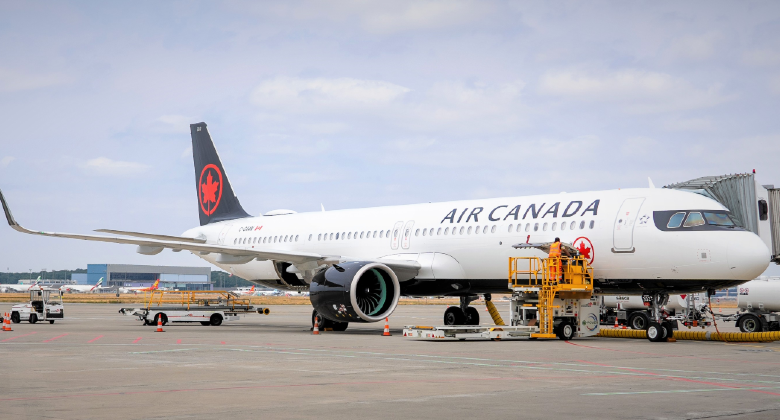
Air Canada introduced the A321XLR on its Toulouse service this summer, while United has now announced a daily year-round Washington Dulles service from April 2027. How transformational could the new generation of long-range narrowbody aircraft be for Toulouse in attracting additional transatlantic routes?
I think the A321XLR could be particularly transformational for Toulouse because it matches the characteristics of our market extremely well.
Toulouse is not a typical regional airport. We have a very strong and international business economy, with Airbus and the wider aerospace ecosystem at the heart of it, but also a significant presence of technology, engineering, research and other internationally oriented companies. This generates a level of business travel that is particularly relevant for long-haul markets.
At the same time, Toulouse has a large and relatively affluent catchment area, with strong leisure and VFR demand. So for an airline, the opportunity is not based on one single traffic segment: a long-haul route can combine business traffic, visiting friends and relatives, and leisure passengers. That is a very important strength of the Toulouse market.
This trend is already materialising in Toulouse: Air Canada’s deployment of the A321XLR this summer is a strong validation of the market’s long-haul potential and United’s decision to move to a daily, year-round Washington Dulles service from April 2027 is an even stronger signal: it demonstrates that the market is capable of supporting sustained long-haul demand throughout the year, not just a seasonal peak.
The A321XLR is particularly interesting because it allows airlines to address markets that would be difficult to serve economically with a widebody. For Toulouse, this potentially means moving beyond the largest North American gateways and looking at a much wider range of destinations in the US and Canada.
There is also an important strategic point. Toulouse has historically had a relatively limited direct long-haul network compared with the size and economic importance of its catchment area. This means that a significant proportion of long-haul passengers currently have to connect through other European hubs. The opportunity is therefore not simply to create new demand, but to capture traffic that already exists and is currently leaking to other airports and hubs.
This is why we believe the A321XLR can be a game changer for Toulouse. It gives airlines a much more flexible way of testing and developing long-haul markets from our region, with the right level of capacity and frequency.
And our ambition is clearly to go further. We see potential not only in North America, but also in markets such as Asia and Oceania, where Toulouse has a particularly strong business rationale because of the international footprint of our aerospace and other industrial companies.
So, for Toulouse, the A321XLR is much more than an aircraft innovation. It potentially allows us to convert the strength of our economic and demographic catchment into a much broader long-haul network — and we believe the current transatlantic developments are only the beginning.
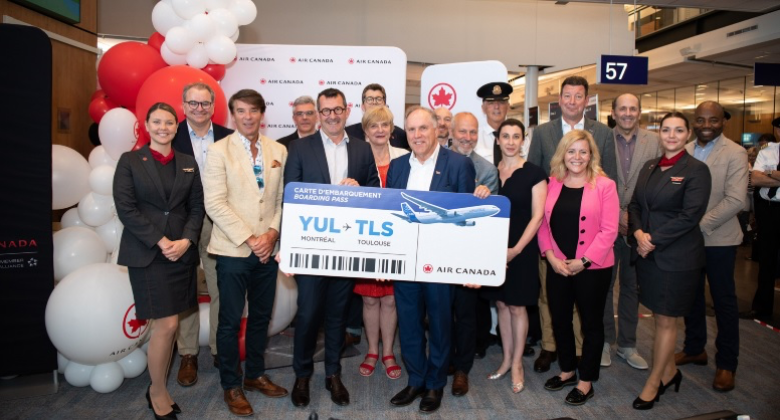
United’s Washington service will give Toulouse its first nonstop link with the United States. How long has the US been a priority for the airport, and does securing Washington make it easier to build the case for further US destinations in the future?
The US has been a priority market for Toulouse for many years. It has always been one of the most significant gaps in our long-haul network, particularly given the profile of our catchment area and the strength of the economic links between Toulouse and North America.
There is a very strong business rationale. Toulouse is at the heart of Europe’s aerospace ecosystem, with Airbus and a large number of suppliers and international companies based in the region. Many of these companies have significant operations, customers and partners in the US. So there is a structural business demand between Toulouse and North America that goes well beyond tourism.
There is also strong VFR and leisure demand, to and from TLS but also combined with other airports nearby (Barcelona for instance) which makes the market even more resilient. Historically, the challenge has been less about the absence of demand than about finding the right airline, aircraft and business model to serve it sustainably.
That is why United’s decision is particularly significant for us. Washington Dulles will not simply be Toulouse’s first nonstop link with the United States; it will also provide access to United’s extensive domestic and international network. It is a major milestone for Toulouse.
But our immediate priority is to make this development successful and sustainable. United’s service is one of only two new destinations announced this year at Toulouse with a year-round operation, which says a lot about the scale of the opportunity — but also about the challenge we face. We need to demonstrate that this market can perform throughout the year and deliver the level of demand that justifies a long-term commitment.
This is why working closely with United and its partners will be particularly important, including Air Canada, which is already operating successfully from Toulouse. We see these airlines not only as individual carriers, but as key partners in building and securing Toulouse’s North American connectivity.
Once we have consolidated these services and demonstrated the strength of the market, it will naturally make the case for further US destinations much stronger. A successful Washington route would give us a very important benchmark and, more importantly, a proven reference point when talking to other airlines about the potential of Toulouse.

So yes, we absolutely see Washington as a potential first building block of a much broader Toulouse–North America network. But we are not taking that success for granted. Our priority today is to make Washington work, alongside our existing North American partners, and to turn the very significant potential of the Toulouse market into sustainable long-term connectivity.
In that sense, United’s arrival is both a milestone and a responsibility: it demonstrates the enormous potential of Toulouse, but it also gives us the opportunity — and the challenge — to prove that potential over the long term.
Domestic traffic remains considerably below its pre-pandemic level, even though Paris has recently performed relatively well. How do you see the role of the French domestic market developing, particularly as Toulouse’s international network continues to expand?
The domestic market will remain important for Toulouse, but I think we are seeing a fundamental change in the role it plays within our network.
First, the decline in domestic traffic since the pandemic is largely explained by a change in business travel behaviour. Business passengers travel less frequently than they used to, with more remote meetings and greater scrutiny of travel budgets. This has had a significant impact on domestic routes, which traditionally relied heavily on business traffic.
Toulouse is also a very particular case in France. We are one of the few major French cities without a direct TGV connection. So, while rail has captured some traffic on certain routes, it cannot fully explain the decline in domestic aviation. For a city that is already the fourth-largest in France, and is likely to become the third largest, with very strong demographic and economic growth, air connectivity remains essential.
Paris will therefore remain a strategic market. The recent performance of the Paris routes shows that there is still strong demand, particularly from business travellers. But we should not necessarily aim to recreate the domestic network we had before Covid. The Toulouse economy and the needs of our passengers have evolved.
Toulouse is increasingly an international economic centre in its own right. Aerospace remains a major driver, with Airbus and the wider aerospace ecosystem, but the economic base is much broader: space, digital and technology, health and life sciences, research and higher education, engineering and advanced manufacturing are all important sectors. Many of these companies have international operations and customers, which creates strong demand for direct international connectivity.
And there is another major opportunity that we believe is still underdeveloped: outbound leisure and VFR traffic. Toulouse has one of the lowest shares of low-cost carrier traffic among the major French airports, despite having a large, affluent and rapidly growing catchment area. This suggests that there is still significant unmet demand for direct leisure connectivity.
The international profile of the region is also often underestimated. We have sizeable communities from the UK, Spain, Germany, Romania, Poland and many other countries. Some of the towns and villages around Toulouse are remarkably international and cosmopolitan. These communities generate strong VFR demand, but also increasingly travel for leisure, creating opportunities well beyond the traditional business market.
So, for us, the question is not about choosing between domestic and international connectivity. Paris remains essential, but the growth opportunity is increasingly international — across business, VFR and leisure.
Our objective is therefore to maintain the domestic routes that are strategically important for the region, while significantly broadening the international network. The opportunity for Toulouse is to have a network that reflects what the city and its region have become: one of France’s largest and fastest-growing metropolitan economies, with a highly international business base, a growing population and a very strong appetite for travel.
Looking beyond the routes already announced for 2026 and 2027, which destinations or geographical markets are now at the top of Toulouse Airport’s route development wish list? Are there particular gaps in Europe, the Middle East, North America or elsewhere that you would especially like to fill?
There are quite a few opportunities on our wish list, but I would group them into three main areas.
First, Europe and the Mediterranean. There are still some very significant gaps in our network compared with the size and profile of the Toulouse market. Greece is probably one of the clearest examples. The level of capacity between Toulouse and Greece remains surprisingly low compared with other major French regional airports. Tunisia and Turkey are also markets where we see significant potential, as well as a number of destinations in Central and Eastern Europe.
The UK is another major priority. We have a very large British community in the Toulouse region, strong tourism flows and significant business links, yet there is still considerable room to develop the network. Germany and Switzerland are also priorities because of the strength of our business relationships with these markets.
Second, we see significant potential beyond Europe. On long-haul, Asia is particularly high on our list. Japan and India are two markets where the economic rationale is particularly strong, given the international footprint of Toulouse companies and, in particular, our aerospace and industrial ecosystem. We would also like to see better connectivity towards Oceania over time.
Third, North America. The arrival of United’s service to Washington is a major milestone, and our immediate priority is to make that route successful and sustainable, alongside our existing relationship with Air Canada. But once we have consolidated Washington, we certainly see potential for additional destinations in the US and Canada. The A321XLR opens up some very interesting possibilities because it allows airlines to look at markets that would not necessarily work with a traditional widebody.
There are also opportunities in the Middle East, although this is not necessarily where I would put our immediate priority. Our focus is on markets where we see the strongest combination of business, VFR and leisure demand and where there is a clear gap in the current network.
So, if I had to summarise our wish list, I would say: more Greece, more UK, more Turkey and Tunisia, stronger links with Germany and Switzerland, and then a new generation of long-haul opportunities towards Asia, North America and eventually Oceania.
And the underlying message is quite simple: we are not looking for destinations simply because they look good on a map. We are looking for markets where Toulouse has a strong underlying passenger demand that is currently either underserved or forced to travel via another hub.
Air Service Fun
What was your most memorable flight and why?
Without a doubt, it would have to be the flight from Lyon to Lisbon in March 2022, when we moved to Portugal.
I was travelling alone with my two daughters, who were just two and four years old at the time, and we had only two suitcases with us. One contained our clothes and essentials, while the other was filled with an inflatable mattress and some blankets. That was going to be our only “furniture” for the first few days, until my husband could join us by car with the rest of our belongings and furniture.
It was definitely an unusual flight — just the three of us, two small children and two suitcases — but it was also the beginning of a very exciting new chapter for our family.
Favourite airline livery?
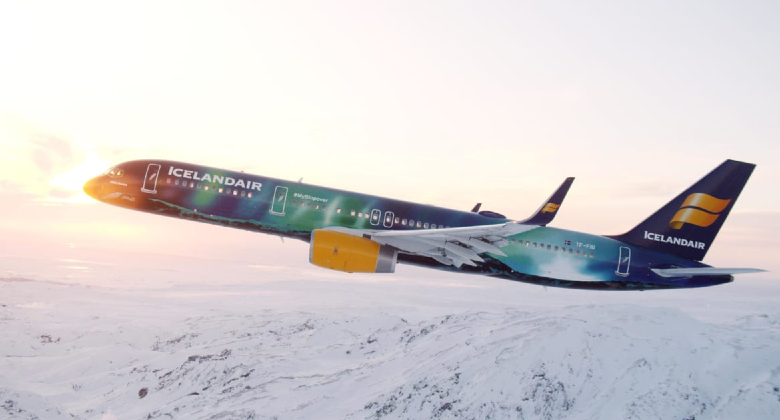
If I had to give one example of a truly “wow” livery, I would probably choose Icelandair’s Hekla Aurora.
What I find particularly interesting is that it is not simply a beautiful design — the livery actually sells the destination. When you see the aircraft, you immediately think of Iceland, the Northern Lights and the travel experience.
And I think that is something that could be very relevant for Toulouse as well. A special livery could go beyond simply using the airport’s colours or logo. It could actually tell a story about the destination — the Pink City, the South of France, our aerospace heritage, rugby, gastronomy, the famous pink brick, or even something that brings together Toulouse and Airbus.
In that sense, a livery can be much more than branding. It can become a way of promoting the destination itself and creating an emotional connection with passengers before they have even arrived.
Was it always going to be aviation or was there another career path opportunity?
It has always been about aviation. I trained as an aeronautical engineer, and throughout my career I have only worked for airlines and airports, apart from a short two-year period in consulting. So, in a way, aviation is really the only industry I know — and, more importantly, the one I still want to grow and develop in.
I have considered moving into other areas of the transport sector at various points in my career, but I never actually took the leap. I suppose that says something about how much I enjoy aviation and how much I still feel there is to discover and achieve within the industry.
Favourite place to visit abroad and why?
I have literally fallen in love with Portugal — with its beauty, its people, its culture, its food, its islands, its beaches, its countryside, its sunshine… and, of course, its sardines! I honestly don’t think there is a single part of the country that I don’t love.
If I had to choose just one place in Portugal to recommend for a trip, though, it would have to be the Azores. They are absolutely magical. It is hard to believe that, just a few hours’ flight from both the European mainland and the American continent, you can find this completely different world.
The Azores are incredibly green and volcanic, with dramatic landscapes, crater lakes, hot springs, waterfalls and an ocean that seems to stretch forever. What I particularly love is that they still feel authentic and relatively untouched. You can go hiking in the morning, swim in natural volcanic pools in the afternoon, and finish the day eating incredibly fresh fish and seafood overlooking the Atlantic.
There is also something very peaceful about the islands. They feel remote without actually being difficult to reach, which makes them a perfect destination if you are looking for somewhere beautiful, wild and a little bit out of the ordinary.
So yes, I would highly recommend Portugal in general — but if you ask me for one secret gem, or perhaps not such a secret anymore, it would definitely be the Azores. It really feels like a little piece of paradise in the middle of the Atlantic.