

Air Service One talks with Federico Scriboni, Director Aviation Business Development, Aeroporti Di Roma.
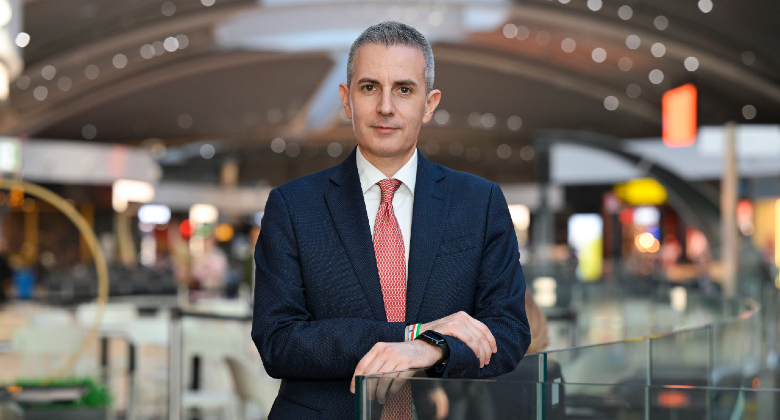
With record passenger growth, expanding long-haul connectivity and a multibillion-euro infrastructure plan aimed at accommodating up to 100 million travellers annually, operator Aeroporti Di Roma is positioning Fiumicino Airport as one of Europe’s leading hubs. The airport is also broadening its transfer role and targeting new markets, while benefiting from the evolving role of its home carrier within the Lufthansa Group. Air Service One sat down with Federico Scriboni, Director Aviation Business Development at Aeroporti di Roma, to discuss these developments and the airport’s future plans.
Looking at 2026, what are your expectations in terms of passenger growth following a record 2025?
Over the past two years, Rome FCO has been one of the fastest-growing airports in Europe, achieving outstanding milestones: passenger traffic increased from 43.5 million in 2019 – our previous record – to 51.3 million in 2025. In other words, we recorded strong traffic growth, with an increase of 7.8 million passengers, mainly driven by international markets. This evolution is the result of significant network development and business diversification, which has enabled FCO to offer over 240 destinations across five continents, in around 80 countries, served by nearly 100 airlines.
Building on these incredible results, 2026 is showing further positive momentum, as we continue to grow year over year. We expect to exceed 2025 traffic levels, setting new records. Some segments are driving this growth, such as North America with a 17% increase or Far East Asia with a 12% growth compared to 2025.
To what extent is Fiumicino evolving from a primarily origin-and-destination airport into a more transfer-oriented hub, and how does this play in your long-term strategy?
Our strategy relies on solid pillars, as well as a clear understanding of the market strength represented by Rome, one of the most attractive destinations in the world and one of the largest catchment areas for outbound traffic flows in Europe. These fundamentals are, and will continue to be, key elements in positioning our airport primarily as an origin-and-destination airport.
At the same time, we have been increasingly focusing on developing transfer traffic over the years. Fiumicino is already a leading hub for connecting passengers in Central and Southern Europe for several reasons. First of all, the network: we are significantly expanding the number of directly served destinations, and we can count on many unique routes not operated by any other airports in our competitive region. Equally important is the quality delivered to passengers and airlines, as well as the overall airport experience we offer to connecting passengers: Fiumicino is a 5-star airport certified by Skytrax and has been awarded Best Airport in Europe for Service Quality by ACI World for the ninth consecutive year. Last but not least, the repositioning of ITA Airways within the Lufthansa Group and its recent entry into Star Alliance: we believe that the evolution of our hub carrier will provide additional opportunities to capture new transfer traffic flows, while enabling Fiumicino to play an increasingly important role within the Lufthansa Group’s hub system for intercontinental connectivity.
Looking further ahead, this long-term vision is fully supported by the Sustainable Development Plan for Leonardo da Vinci Airport, to better manage the expected traffic demand through to 2046 and welcoming around 100 million passenger per year. To support this growth, Aeroporti di Roma has envisaged a €9 billion investment plan, entirely without public funding: €4 billion for the maintenance and upgrading of current infrastructure and €5 billion for new works, including major strategic airport infrastructures, such as a new terminal and a new runway, alongside additional works designed to generate tangible benefits for the surrounding area and local communities.
Which unserved or underserved long-haul markets are currently the highest priority for network development, particularly across Asia, Africa and South America?
Even though we already offer a wide range of long-haul destinations, there are still significant development opportunities, particularly in some of the largest unserved markets in Asia, which already show strong demand, with a market potential of hundreds of thousands of passengers, such as Manila, Colombo, Osaka, and Jakarta.
We also see strong opportunities in South America, with new potential destinations such as Lima, Santiago, and Bogota, as well as in Africa, including Johannesburg, Cape Town, and Lagos.

Are there specific European markets where you see the greatest potential for additional frequencies or new entrants?
Major markets such as London, Paris, Madrid, and Barcelona remain essential in terms of volumes. They show very strong but continuously evolving demand, therefore offering opportunities especially in terms of increased frequencies and greater competition. The main growth potential in the European market, however, is concentrated in Northern and Central/Eastern Europe, where there are growing economies and dynamic, rapidly expanding markets, as well as in Northern Europe due to its strong business component and the high value of traffic.
How diversified is your airline portfolio today, and are you placing greater emphasis on full-service carriers, low-cost operators, or long-haul network airlines?
We have a well-diversified portfolio, with 100 airlines regularly operating at Rome FCO on a scheduled basis, ensuring a sustainable level of competition and a wide range of options for our customers. The share of the main segments is well balanced, and capacity distribution among full-service, low-cost, and long-haul airlines is in line with market demand, enabling us to meet different passenger needs.
With a view to maximizing customer satisfaction, we strongly believe in the value of segmentation, allowing us to provide the best airport services to each airline segment, which are all equally important to us.
The expansion of Qantas’ Rome – Perth service represents a significant boost to connectivity with Australia. How do you see this route evolving, and are there opportunities for further growth in the Oceania market?
Summer 2026 marks the 5th consecutive year of Qantas’ operations. Perth–Rome is a truly iconic route: with more than 16 hours of flight time, it is the longest route in our network since the Australian airline chose Fiumicino as its first airport for developing ultra-long-haul connectivity to continental Europe.
The complexity of this operation and the significance of its operating costs required careful capacity management. However, thanks to strong market success, the offer has steadily improved over the past four years and from late June Qantas will reach a daily frequency through the end of the peak season.
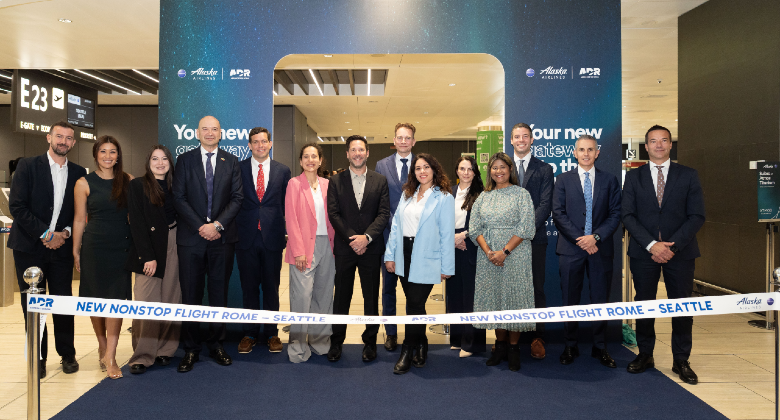
With the upcoming entry of Alaska Airlines on the Seattle route, could we expect additional secondary US destinations to be linked with Rome?
First of all, allow me to share how proud we are to be Alaska Airlines’ launch airport for its new transatlantic adventure. This development will not only allow us to welcome a significant new airline into our client portfolio, but will also open, for the first time ever, direct connectivity between Italy and Seattle. I would not consider this destination as “secondary”, as it represents a strong point-to-point market and a relevant hub for serving the entire Northwest region and beyond the United States.
We surely believe that this new route will be followed by further achievements in the future as the US market, and more generally North America, is a key driver of our long-haul traffic growth, as confirmed by current figures: up to 42 daily departures to 22 North American destinations are expected during the peak months of Summer 2026, marking a 40% increase versus 2019. Such a solid evolution is the best guarantee for the future development of this strategic market.
