

Air Service One talks with Mathias Richter, Manager Aviation Marketing, Traffic Forecast & Analytics, Münster/Osnabrück Airport

Air Service One had the pleasure of speaking with Mathias Richter, Manager Aviation Marketing, Traffic Forecast & Analytics, Münster/Osnabrück Airport, to learn more about one of Germany’s best-recovered airports. He shared insights on how FMO competes with its larger counterparts, the latest infrastructure developments and much more. Of course, we couldn’t resist asking a few fun questions to get to know Mathias on a more personal level as well!
Münster/Osnabrück was Germany’s fastest growing airport in 2024. Can you tell us how the airport has performed during the first half of 2025 and what are your expectations in terms of passenger traffic for the rest of the year?
In the first six months of the year, FMO recorded a total of 525,489 passengers, which is a 1.8% decrease compared to the same period last year. Despite the suspension of the high-volume FMO-FRA route and experiencing above-average growth of 30% in the previous year, the airport has maintained its high passenger numbers. FMO remains one of the best-recovered airports in Germany, having seen a 31% increase compared to 2019. We expect the slight negative trend to continue for the rest of the year.
What has driven the strong growth last year?
Strong growth was mainly driven by high demand for leisure travel. Our two key leisure routes, to Antalya (386,000 passengers) and to Mallorca (341,000 passengers), saw significant growth of +50% and +27% respectively. Existing partner airlines such as Corendon Airlines, SunExpress, Ryanair and Eurowings increased their capacity. New carriers such as Mavi Gök Airlines, Pegasus Airlines and Condor entered these markets. Ryanair also launched a new route to Alicante.
How does FMO compete with larger airports in the region, such as Dusseldorf or Cologne Bonn, particularly in attracting new airline partners or maintaining existing ones?
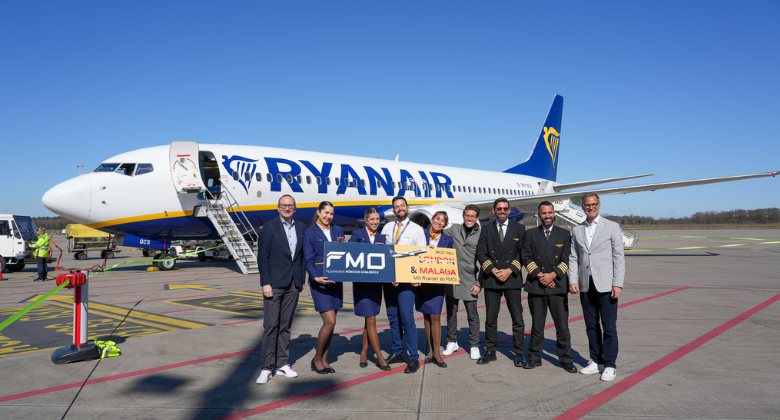
Our focus lies on promoting the attractive market potential and advantages of Münster/Osnabrück Airport. One of our key USPs is that FMO is open 24/7 with no slot restrictions. This enables airlines to operate completely flexible and to increase their aircraft utilisation. These flight times are also attractive to leisure passengers, as they arrive very early at the destination and depart very late from the destination allowing them to spend more time at their holiday destination. Secondly, FMO has its own unique catchment area of 3.4 million inhabitants, which is quite sizeable for a smaller airport. Additionally, the airport’s catchment covers the east of the Netherlands, and we are seeing a continuously growing share of Dutch passengers (15% in 2024). Airlines also need to consider is that the airport serves an area with a strong economy and an affluent population with a desire to travel. The GDP per capita in the cities of Münster and Osnabrück is higher than in other comparable cities. Finally, we support new and existing airline partners with dedicated incentives and bespoke marketing solutions.
Competing with larger airports is always challenging and enables surface leakage as larger airports usually have a wider range of destinations, better schedules and cheaper fares. However, FMO aims to attract passengers with an excellent airport experience (short distances, fast handling, friendly staff, cheap car park fees etc.). Evidence of this can be seen in the fact that FMO has a Google rating of 4.3 stars, making it Germany’s most popular airport with over 1 million passengers.
Is there interest to connect Münster/Osnabrück with major hubs beyond Munich? If so, which ones are a priority for you?
FMO currently offers four daily departures to Lufthansa’s Munich hub, providing connections to over 100 destinations of Lufthansa and their Star Alliance partner airlines. For a smaller airport, this level of connectivity is appropriate and important. Ideally, we would like another high frequency connection to another hub, but this is difficult to achieve post-Covid, given the changed travel behaviours. One of the best options would be a low-frequency connection to another Lufthansa Group hub like Vienna or Zurich to complement the existing hub connection. Additionally, we see strong potential for a Turkish low-cost airline and a connection to Istanbul, as there is strong and proven demand for point-to-point traffic and traffic to the beyond destinations.
Are there particular geographic markets, like Southern Europe, the UK, Eastern Europe, or beyond, that you see as untapped or underutilised for FMO?
As an airport, our focus is expanding our destination portfolio with numerous unserved route opportunities across all geographic markets.
Key opportunities certainly lie in Southern Europe with strong demand for leisure travel. The Canary Islands and some Greek Islands, such as Rhodes and Kos, are all routes that have been served from Münster/Osnabrück for decades. Additionally, destinations such as Faro and Thessaloniki would complement our destination portfolio.
In CEE and Eastern Mediterranean, we see strong VFR demand in relation to our large and diverse international population (countries like Türkiye, Ukraine, Poland).

Are there routes you’re actively trying to make year-round?
In our current network, all routes with year-round demand are already served year-round, with one exemption. Hurghada is currently only served during the summer, but we know that there is proven demand for the winter season.
Last winter season we had three routes to the Canary Islands with the potential of a year-round services, but this market is currently completely unserved.
Has any market operated out of FMO particularly stood out for its strong growth post-pandemic?
The Antalya route experienced the greatest growth. This market was already strong in 2019, having attracted almost 190,000 passengers. Fast forward to 2024 and the route had grown by 105%, reaching 386,000 passengers and becoming FMO’s busiest route. Five airlines served this route with up to 49 departures per week in peak times. Antalya is a prime example of a destination where operating airlines took particular advantage of the unrestricted 24/7 opening hours.
Can you tell us about some of the recent infrastructure developments at the airport?
Over the last two years, the airport has invested heavily in modernising its infrastructure to improve passenger satisfaction. These investments have been made throughout the entire customer journey from upgraded car parks and the introduction of self check-in and self baggage drop-off units to the opening of a new land-side restaurant, a new duty-free and food & beverage outlet and a new lounge, as well as modernised sanitary facilities.
Investments are also being made on the apron side to reduce CO2 emissions and make the airport operations CO2 neutral by 2030. These include LED apron lighting, electrically powered passenger buses and electrical ground power units.
Air Service Fun:
What was your most memorable flight and why?
For the last hour of the flight to Havana, I was fortunate enough to sit in the cockpit jump seat of a Boeing 777. Seeing the crew prepare the aircraft for landing, approach Havana close to Key West, and land the aircraft safely was very impressive.
Favourite airline livery?
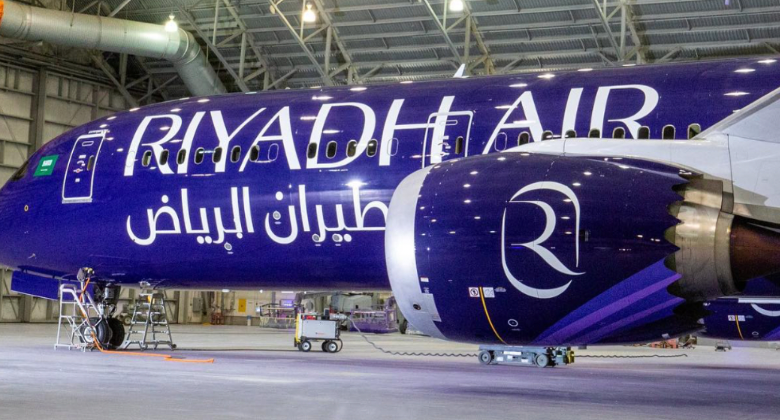
In general, I like aircraft with fully coloured liveries. Riyadh Air’s striking purple livery on its Boeing 787-9 looks stunning.
Was it always going to be aviation or was there another career path opportunity?
Although I studied general transportation economics, which offered many potential career paths, I was always fascinated by aviation. Ultimately, I was very fortunate to begin my career with CityJet in the network department in Ireland, despite having no work experience.
Favourite place to visit for vacation and why?
I have visited around 80 countries and nowadays try to go to countries or regions that are less visited. It is very hard to pick a favourite place, but having visited all Central Asian countries I have to admit, that I love this region: hospitable people, diverse cultures, great architecture (from ancient to modern), stunning landscapes, unspoilt nature, fascinating cities and great food.
