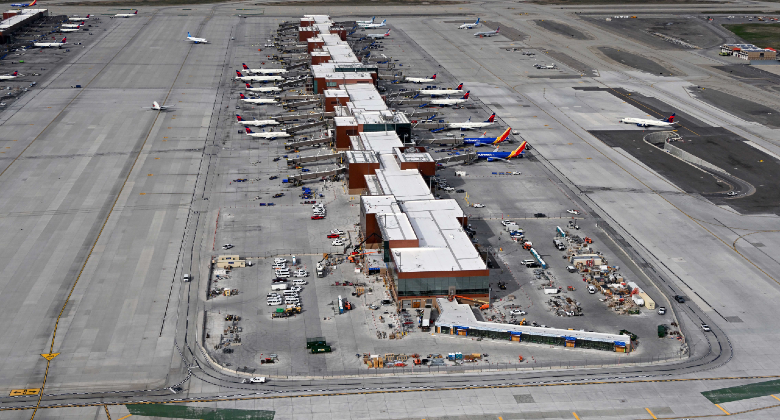
Air Service One talks with Nate Lavin, Air Service and Business Development Manager, Salt Lake City International Airport.

Serving as one of the fastest-growing airports in the western United States, Salt Lake City International Airport has been strengthening its position through rising international demand, new long-haul routes and continued infrastructure expansion. Nate Lavin, Air Service and Business Development Manager, spoke to Air Service One about the airport’s recent performance, evolving network strategy and long-term growth outlook.
Salt Lake City International Airport (SLC) handled over 28.1 million passengers in 2025, slightly less than the previous year amid a slowdown in leisure travel. What are your expectations for this year?
With last year’s economic uncertainties’ effect on the aviation industry, SLC did experience some domestic softness to leisure cities. However, the real star of the show was our international demand, which increased over 9% compared to 2024. This was largely due to new international routes added in 2025, including our first-ever nonstop flights to Seoul/Incheon, South Korea and Lima, Peru on Delta, new flights to Edmonton, Canada on WestJet and expanded service to Amsterdam on KLM. This international momentum continues into this year, with the addition of Volaris, who launched flights to Guadalajara on June 1.
How does SLC position itself within the competitive landscape of Western U.S. hubs, particularly against airports such as Denver or Phoenix?
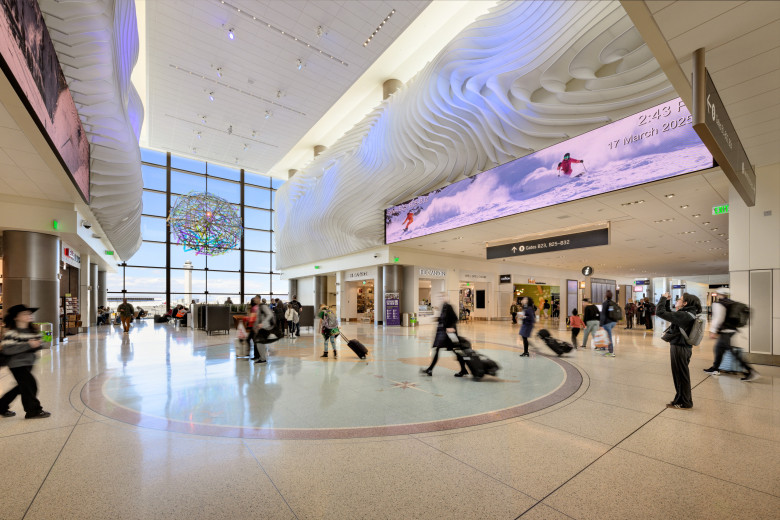
Salt Lake City and Utah have long been known as the Crossroads of the West due to our central geographic location and proximity to other major U.S. cities. It’s where the nation’s first two intercontinental railroads came together, later becoming a converging point for major interstates and a domestic regional air hub for Western Airlines, now Delta Air Lines. Our region has grown quickly over the last two decades and so has our airport. The New SLC is not only setting the standard for customer experience but also propelling us into truly becoming the Crossroads of the World. We now have nonstop flights to four continents, one of 14 U.S. airports to reach that milestone, and by far the smallest. This speaks to our distinctive market characteristics that, coupled with our location, optimally position SLC for intercontinental traffic flows. So, while we may not have the volume some peer airports have, we offer something unique, and more is on the way.
The airport is heavily dominated by Delta, which accounts for a significant share of traffic. How do you balance the benefits of a strong hub carrier with the need to diversify the airline base?
SLC is incredibly fortunate to be a core hub for Delta, and we maintain a very strong partnership with them. There is no question, we wouldn’t be the airport we are without their investments. Based on our market size, we simply wouldn’t have fights to 105+ nonstop destinations in eight countries. Fortifying Delta and their Skyteam and joint venture partner’s presence at SLC remains an integral part of our air service strategy. Though, it’s not the only part. Even with our hub carrier’s impressive network here, we do see route opportunities that exist outside Delta’s network strategy. By working to fill in these gaps with other carriers, we are fulfilling our responsibility to respond to all of our community’s air service needs.
What is your strategy for expanding international connectivity beyond existing markets?
We believe SLC is primed to continue its international expansion, especially as congestion increases at other major U.S. gateways. Our market continues its rapid economic and population growth, which has transformed us into a predominately O&D airport, rather than connecting. In addition, we are a highly sought after visitor destination, whether it’s for our popular national parks or our phenomenal winter sports, visitors come from all over the world to experience what Utah has. Not to be overlooked is SLC’s customer experience—which has already received global recognition for being the most reliable, clean and enjoyable airport in North America. By building on these strengths, we are more optimistic than ever that we are just scratching the surface on expanding our global air network.
Are there specific long-haul opportunities, such as Europe or Asia, that you see as viable in the medium term, particularly given the airport’s geographic positioning?
We have our eyes set on many new long-haul opportunities in the medium and longer term. A couple examples would include Rome and Tokyo—markets where we are experiencing significant demand growth and are natural adds to our route map. Other opportunities also exist in South America beyond Lima. Just as important, though, is maturing and expanding our current route offerings. For instance, building up Delta’s London-Heathrow service from five times per week to daily and maturing their new Seoul/Incheon and Lima flights. These are imperative steps for us to take if we are going to introduce more.

How important are Canadian and Mexican markets in your network development strategy, and do you see potential for further growth in these segments?
Our transborder markets remain top priorities for SLC. Our market has very strong cultural, economic, religious and social ties with both countries, and we see a tremendous need to expand our network on both sides, especially in Mexico. We are thrilled to be one of two new U.S. stations Volaris opened this year and anticipate that partnership with them will develop quickly. From here, the next natural route opportunities are likely Monterrey and the Bajío region in Mexico and Montréal in Canada.
What is your strategy for expanding international connectivity beyond existing markets?
We believe SLC is primed to continue its international expansion, especially as congestion increases at other major U.S. gateways. Our market continues its rapid economic and population growth, which has transformed us into a predominantly O&D airport, rather than connecting. In addition, we are a highly sought after visitor destination, whether it’s for our popular national parks or our phenomenal winter sports, visitors come from all over the world to experience what we have. Not to be overlooked is SLC’s customer experience—which has already received global recognition for being the most reliable, clean and enjoyable airport in North America. By building on these strengths, we are more optimistic than ever that we are just scratching the surface of expanding our global reach.
Are there specific long-haul opportunities, such as Europe or Asia, that you see as viable in the medium term, particularly given the airport’s geographic positioning?
We have our eyes set on many new long-haul opportunities in the medium and longer term. A couple of examples would include Rome and Tokyo—markets where we are experiencing significant demand growth and are natural adds to our route map. Other opportunities also exist in South America beyond Lima. Just as important, though, is maturing and expanding our current route offerings. For instance, building up Delta’s London-Heathrow service from five times per week to daily and maturing their new Seoul/Incheon and Lima flights. These are imperative steps for us to take if we are going to introduce more.
How important are Canadian and Mexican markets in your network development strategy, and do you see potential for further growth in these segments?
Our transborder markets remain top priorities for SLC. Our market has very strong cultural, economic, religious and social ties with both countries and we see a tremendous need to expand our network on both sides, especially in Mexico. We are thrilled to be one of two new U.S. stations Volaris opened this year and anticipate that our partnership with them will develop quickly. From here, the next natural route opportunities are likely Monterrey and the Bajío region in Mexico and Montréal in Canada.
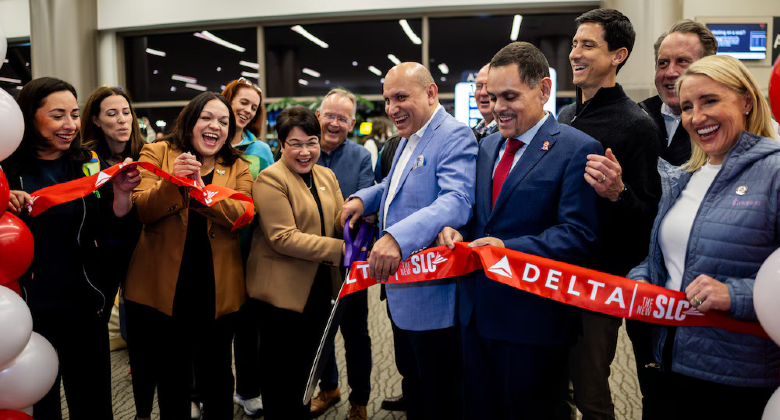
With the recent opening of 10 new gates in Concourse B, alongside new concessions and premium lounges, does the additional capacity impact airline interest and route development discussions?
These new gates along with the additional gates planned for later this year, are anticipated to finally provide the airport relief from significant gate constraints that have existed since well before the project began in 2014. We have increased the number of common-use gates to accommodate new entrants, and our international gate capacity has doubled. Almost every one of our existing signatory carriers leased more gates in the new facility as well. A permanent ground load facility on the end of Concourse B-east has also been constructed to enable even more growth opportunities.
What other infrastructure upgrades are in the works at the airport?
We’re on final approach to completing The New SLC in 2026, which allows us to start shifting focus and resources to other projects that need attention. Most notably, airfield enhancements and air cargo developments that will continue to position SLC well for future growth. Planning and approval stages for an extension to our centre runway are well underway, intended to improve aircraft take off performance during our hot summer months at our high altitude. The extension will also allow us to broaden our global reach to markets that are currently inaccessible and yet have notable demand. In addition, new taxiways are under construction that will increase the efficiency of the airfield and enable us to build a Concourse C at some point after hosting the 2034 Winter Olympic Games. We’ve also entered into an agreement with Aviation Facilities Company (AFCO) to build a new multi-tenant cargo throughput facility to address the growing need for more robust cargo capabilities at the airport.