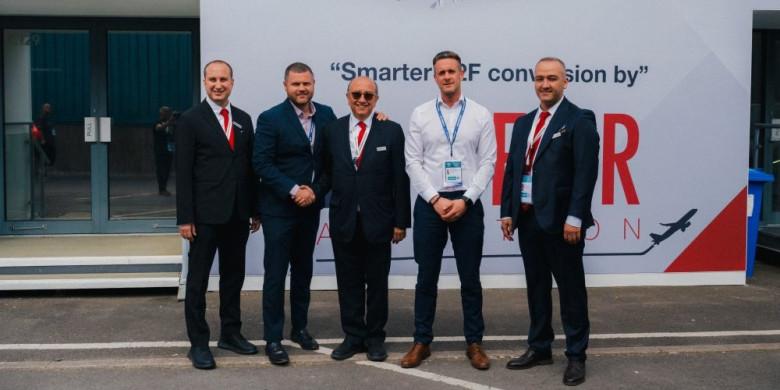
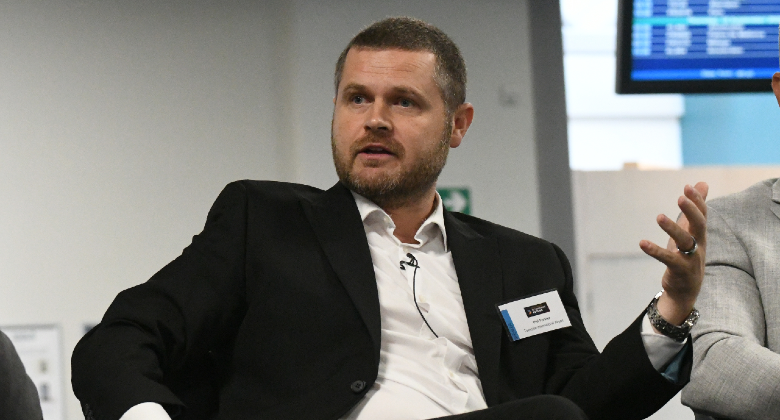
Air Service One talks with Phil Forster, Managing Director, Teesside International Airport.
Teesside International Airport has undergone a notable transformation since returning to public ownership in 2019, rebuilding its route network while pursuing an ambitious strategy that extends beyond passenger traffic. Alongside attracting new airlines and expanding leisure connectivity, the airport is investing heavily in cargo, maintenance and commercial developments as it seeks to establish itself as a major aviation and business hub for northern England.
Air Service One spoke to Phil Forster, Managing Director at Teesside International Airport, to discuss the airport’s progress, growth strategy and priorities for the years ahead.
Teesside Airport has undergone a significant transformation over the past few years. How would you assess the progress made in rebuilding the airport’s route network?
Rebuilding our airport’s route network has been challenging but we’ve embraced it. The focus has been on attracting leisure airlines to serve the known demand for leisure travel within the airport’s immediate catchment area. This has been borne out in the routes we see today.
TUI was a key target and the company currently operates two flights weekly to Palma de Mallorca, which consistently achieve very high load factors. We remain in positive talks and continue to encourage further growth with new routes.
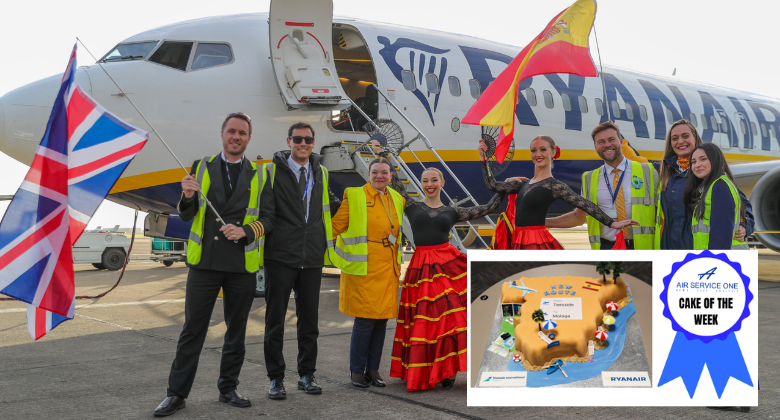
Ryanair has an extensive overseas base network which opened up the opportunity for Teesside to be served from popular resort airport bases. This has seen our route network with Ryanair grow to five popular destinations served by 11 weekly flights.
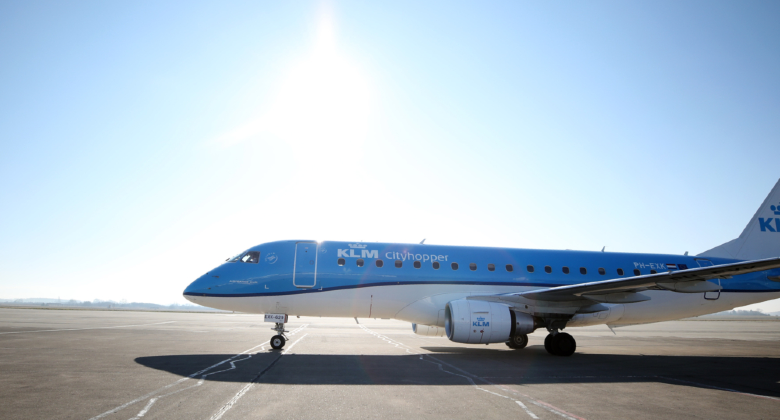
KLM is a consistent, longstanding partner with flights to Amsterdam and vital onward worldwide connections.
It has been disappointing to see the demise of Eastern Airways, which saw the loss of the long-standing Aberdeen route, which due to the lack of domestic scheduled airlines, is proving exceptionally difficult to replace. In all, I’d see it as positive overall but we’ve still got plenty of potential and room for growth.
What distinguishes Teesside Airport from other regional airports competing for airline investment?
Teesside is ideally located in the centre of the North of England serving the North East and North Yorkshire.
We have a catchment area of 2.5 million people living within a 60-minute drive time which means we have a high ceiling and plenty of people to reach across our region and beyond.
When it comes to our passenger experience, we have great surface access and pride ourselves on our personal and award-winning customer service. We have parking opposite the terminal building at a competitive price – meaning you can go from car to gate in well under 10 minutes. We also offer highly competitive commercial incentives for our airlines. Crucially, our wider business park expansion across the airport estate is making up a one-stop-shop for airlines. We have handling, our fuel farm and cargo facilities all in-house which offers assurance and ease for our partners.
Several new routes and airline partnerships have been secured in recent years. Which markets have demonstrated the strongest demand?
Being a leisure-focussed airport, the strongest demand has been for leisure sunshine destinations with Alicante, which has seen capacity grow year on year, and Palma de Mallorca which records consistently high load factors. We’ll look to build on these and look to promote what we do best to secure our targets for the future.
How important have leisure routes been in supporting the airport’s growth strategy?
Leisure routes are very important and remain the main focus of the airport’s route development strategy. Not only do we regularly speak to operators and airlines about introducing new routes, we look to build on what we have to increase frequency and meet that demand. The airport is diversifying its strategy but building on our leisure routes, supporting on our loyal passenger base, and attracting more people from our catchment area are key.

Which European markets remain a priority for future route development?
Teesside has invested in compelling market catchment data, which shows the passenger traffic from within the immediate catchment area which is currently travelling to competitor airports to take a flight. The following are the top eight unserved destinations from Teesside by passenger demand:
- Dublin
- Tenerife
- Belfast
- Lanzarote
- Antalya
- Barcelona
- Paris
- Dalaman
These destinations are the airport’s priority focus for attracting airlines to serve the routes.
Do you see opportunities to attract additional low-cost carrier capacity in the coming years?
Yes, to those destinations mentioned. They are the big opportunities which the data shows. The Teesside catchment area is underserved, and this is backed by the catchment data we have available.
The Tees Valley region has a strong industrial base, including energy, manufacturing and offshore sectors. How important is business travel in your route development strategy?
Business travel is very important to us. Our KLM Amsterdam link is a key part of this – and has been for decades. The airport is continuing to work to secure an airline to operate the Aberdeen route to serve the oil and gas industry. On our target list, Belfast and Dublin are important business routes, while Billund and Esbjerg are key business routes to serve the offshore power industry which are also in our sights.
Teesside Airport has invested heavily in developing its cargo capabilities. How important is freight growth to the airport’s long-term business strategy?
Freight growth is a crucial part of Teesside Airport’s long-term business strategy because it helps diversify revenue streams beyond passenger services and strengthens the airport’s role as an economic hub for the region. The airport has invested in cargo facilities and infrastructure to attract freight operators, logistics companies, and supply-chain businesses. We’re at the heart of Northern England – and we’re in a great strategic location near major road, rail, and industrial networks in North East England.
Our cargo activities generate income from handling fees, warehousing, aircraft movements, and related commercial services, reducing reliance on passenger traffic – which is crucial to securing our future. Beyond this, our increased freight capacity supports local industries, manufacturing, and international trade, helping create jobs and attract investment. It all links together.
What’s more, cargo flights can operate outside peak passenger hours, which improves the efficiency and profitability of airport infrastructure. And, importantly, building freight builds resilience. The demand is so often less seasonal than passenger travel, providing a more stable source of business activity and revenue for the airport.
For Teesside, freight growth aligns perfectly with our broader ambitions to develop the airport as a logistics and business centre. This will complement our passenger aviation offer, our maintenance operations, and our surrounding business park developments.
While passenger growth remains important, cargo expansion is a vital strategic pillar that we will look to build to enhance the airport’s financial sustainability and support regional economic growth in the long term.
The airport is pursuing significant commercial development around the site. How important is the planned business park to the airport’s overall growth strategy?
The business park is absolutely central to our growth strategy. When we brought the airport back into public ownership in 2019, we were clear that this is not just a passenger airport but a strategic economic asset with the potential to drive jobs, investment and long-term sustainability across the region.
For too long, vast areas of land here stood underused or derelict, limiting what the airport could offer. The business park changes that completely. By bringing forward high-quality aviation and commercial space, from world-class hangars to flexible industrial units, we are creating an environment where businesses can invest, expand and thrive.
The importance of this is that it’s targeted, demand-led and backed by long-term partnerships. We’ve attracted successful operators including Willis Aviation – and their expanding MRO offer at Teesside, International aircraft painting firm Airbourne Colours, which has taken on two hangars, and defence firm Draken creating a second hangar on the back of its £173 million MOD contract win. This expansion shows there is real appetite for what we’re delivering. These developments are anchoring the business park, attracting further interest and unlocking additional land for future phases – particularly as we look to build on our cargo offering.
Just as importantly, the business park diversifies our income. It strengthens the airport’s financial resilience by reducing reliance on passenger numbers alone, while supporting high-value employment and supply chains.
So, in simple terms, the business park isn’t an add-on, it’s fundamental. It underpins our commercial model, our sustainability, and our ambition to position Teesside as a nationally significant aviation and business hub.