Air Service One talks with Rebecca Francosky, Director of Air Service Development, Hartsfield-Jackson Atlanta International Airport.

Hartsfield-Jackson Atlanta International Airport retained its position as the world’s busiest airport in 2025, handling more than 106 million passengers while continuing to strengthen its global route network and invest in major infrastructure projects. Air Service One spoke with Rebecca Francosky, Director of Air Service Development at Hartsfield-Jackson Atlanta International Airport, about the airport’s recent traffic performance, international growth strategy, emerging route opportunities, competition for new long-haul services and the multibillion-dollar ATLNext development programme.
Atlanta Airport handled more than 106 million passengers in 2025, maintaining its position as the world’s busiest airport. How would you assess the airport’s traffic performance over the past year, and have passenger trends developed as expected?
While overall passenger traffic remained relatively flat over the past year, we view that as a solid performance given the broader industry environment, as airlines across the industry focused on optimizing capacity and profitability rather than rapid expansion. The trends were generally in line with our expectations. Over the past year, we welcomed new routes both domestically and across several global regions. We worked closely with our airline partners to align capacity with demand, strengthening ATL’s network and positioning the airport for future growth.
To what extent is the focus now shifting from domestic connectivity towards strengthening international services?
Our domestic network remains the foundation of ATL’s success and one of our greatest competitive advantages. We are committed to maintaining that unparalleled connectivity while strategically expanding our international network, where we see the greatest long-term growth opportunities. As airlines receive additional aircraft deliveries and international demand continues to strengthen, Atlanta is exceptionally well-positioned to support new global service. With one of the world’s largest origin-and-destination markets, extensive connecting opportunities, and strong partnerships across the business, tourism, and economic development communities, ATL offers airlines a compelling platform for international growth. Our objective is to continue building a balanced, resilient network that strengthens Atlanta’s role as the premier gateway to the Southeastern United States while maintaining the connectivity that has made ATL the world’s busiest and most efficient airport.
Which global regions currently represent the largest white spaces in Atlanta’s network?
Asia and Africa represent the greatest long-term opportunities for expanding Atlanta’s global network. In Asia, we currently offer nonstop service to Seoul and Tokyo, but demand extends well beyond those markets. Seven of our 10 largest unserved international markets are in Asia, with India representing Atlanta’s single-largest unserved market. Africa is another strategic priority. ATL currently offers nonstop service to six destinations across five African countries, reflecting the strength of our airline partnerships and the region’s growing importance to Atlanta. Our focus is twofold: supporting the transition of seasonal services to year-round operations where demand supports it, and pursuing new nonstop opportunities to key markets such as Egypt and Kenya. Strong business ties, growing tourism, cargo opportunities, and vibrant diaspora communities support these markets.
Are there destinations that you believe are now commercially viable because of changing demographics, corporate investment or tourism flows in Georgia?
Absolutely. Georgia’s continued population growth, expanding international business network, and increasing global tourism have created opportunities for nonstop service that may not have been commercially viable a decade ago. Significant investment from multinational companies, particularly in advanced manufacturing, technology, logistics, and electric vehicles, has strengthened demand for international business travel. At the same time, Atlanta’s diverse and growing diaspora communities continue to support robust visiting friends and relatives (VFR) traffic. These trends, combined with ATL’s role as the premier gateway to the Southeastern United States, make several markets—particularly in India, Asia, and Africa—increasingly attractive for future nonstop service.

Aircraft such as the Airbus A321XLR are opening thinner long-haul markets. Do you expect next generation narrowbody aircraft to change Atlanta’s international network?
Next-generation aircraft like the Airbus A321XLR have the potential to expand the range of commercially viable international opportunities by allowing airlines to serve markets that may not yet support larger widebody aircraft. At ATL, we expect the A321XLR to serve as a natural successor to the Boeing 757, which currently operates more than 58,000 scheduled flights annually from the airport. While these aircraft will likely continue to play an important role in Latin America and the Caribbean, their increased range and improved economics could also enable additional service to select South American and transatlantic markets. Ultimately, fleet modernization gives airlines greater flexibility to match capacity with demand, and we see that as another tool to strengthen Atlanta’s global connectivity over the long term.
How does Atlanta compete against other major US hubs for new international services?
Atlanta competes from a position of strength because it offers airlines a unique combination of market demand, operational efficiency, and long-term profitability. As one of the nation’s largest and fastest-growing metropolitan areas, Atlanta generates strong local demand driven by a growing population, a high propensity to travel, and above-average household income. Combined with our favourable geographic location, airlines can efficiently serve both domestic and international markets through one of the world’s most connected hub airports. Operationally, ATL’s highly efficient airfield and industry-leading cost per enplaned passenger help airlines maximize aircraft utilization while keeping operating costs competitive. When you combine these advantages with our extensive connectivity and collaborative partnerships with our airlines, Atlanta offers one of the strongest value propositions for international air service in the United States.
Delta Air Lines accounts for a notable portion of Atlanta’s passenger traffic. How closely does the airport collaborate with its hub carrier on network planning?
Delta is an invaluable strategic partner, and we maintain regular engagement with its network planning team throughout the year. While route decisions ultimately rest with Delta, we work to identify opportunities that support both Delta’s long-term network strategy and ATL’s vision for sustainable growth. This partnership has been a key driver in maintaining Atlanta’s position as the world’s busiest and one of the world’s best-connected airports.
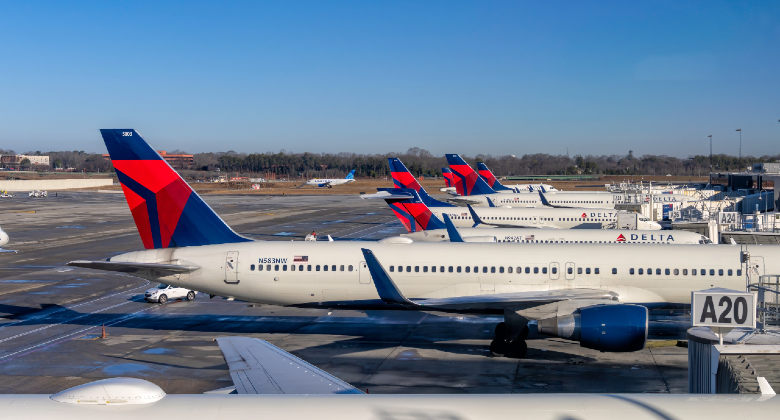
ATLNext represents one of the largest airport development programmes in North America. Could you tell us more about it?
Hartsfield-Jackson Atlanta International Airport launched ATLNext in 2016—a multibillion-dollar capital improvement program transforming the world’s busiest airport. Spanning more than 100 projects delivered in phases over approximately 20 years, ATLNext is designed to enhance the passenger experience, expand capacity to meet projected demand through the mid-2030s, and proactively maintain and revitalize our existing facilities through the replacement of critical systems and infrastructure. Built on three strategic pillars—Capacity Increases, Renewal and Replacement, and Customer Service—ATLNext directly advances ATL’s mission to deliver a safe, efficient, and exceptional travel experience while driving regional economic growth. Through ATLNext, the Airport not only builds and reconstructs vital infrastructure but also pioneers technological and service advancements, setting new standards in airport excellence and paving the way for the future of global air travel.