

Air Service One talks with the air service development team at Edmonton International Airport

With passenger traffic returning to pre-pandemic levels, Edmonton International Airport is working to strengthen its domestic and international connectivity. Air Service One spoke with the airport’s Air Service Development team, (Left to Right) Justin Stevens, Manager, Air Service Development, Paige Goueffic, Manager Demand Development and Tourism, Adrian Warchola, Director, Air Service Development and Joel Wilson, Manager, Air Service Development about its most promising unserved markets, opportunities for new routes and the importance of airline diversification.
Edmonton Airport handled 8.14 million passengers in 2025, essentially returning to its pre-pandemic level. How would you characterise the state of the Edmonton passenger market today and what are you expecting for the remainder of the year?
Like many airports across the globe, YEG has faced several unexpected industry challenges in 2026. Higher fuel costs have increased airline operating expenses and contributed to higher fares, creating pressure on travel demand between certain markets.
That said, we remain very encouraged by the strength of the Edmonton market and the continued confidence airlines are showing in the region. Year-over-year capacity is set to increase over the coming months, and we are on track for our largest winter season at YEG since before the pandemic. The growth we are seeing reinforces Edmonton’s long-term potential and the important role YEG plays in connecting our region to the world.

WestJet is by far one of Edmonton’s most important airline partners and has significantly expanded its presence in recent years. How much further can WestJet realistically grow at Edmonton and where do you see the biggest opportunities within its Edmonton network?
WestJet, and our other airline partners, still have significant room to grow in Edmonton. The Edmonton region continues to experience strong population growth, a resilient economy, and increasing demand for air travel. More and more Edmontonians are looking for convenient non-stop options from YEG, creating opportunities for airlines to expand service and capture demand that already exists in the market.
With new aircraft joining WestJet’s fleet in the coming years, Edmonton is well positioned to support additional growth across both domestic and international markets. We see opportunities to increase frequencies on existing high-demand routes, strengthen connectivity to key business and leisure destinations, and introduce new non-stop services where strong passenger demand already exists. As Alberta’s northern gateway, Edmonton offers a large catchment area and a growing customer base that can support continued expansion.

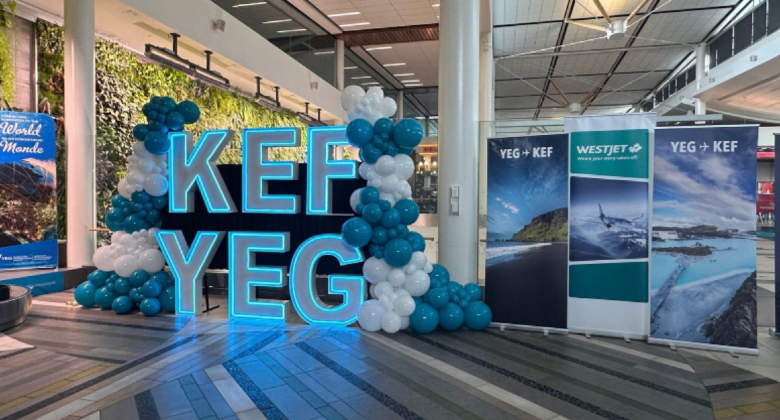
In Europe, Edmonton currently has KLM to Amsterdam and the new weekly WestJet service to Reykjavik. Is the priority now to increase frequencies on existing European routes, or to add completely new European destinations?
If you’re asking an air service development team, the answer is always going to be both.
We continue to work closely with our partners at WestJet and KLM because we believe there is still significant untapped demand between Edmonton and Europe. Increasing frequencies on existing services is important because it improves schedule convenience, creates more connection opportunities, and helps build long-term market sustainability. We see strong opportunities for both airlines to continue growing their Edmonton operations over time.
WestJet’s new service to Reykjavik is particularly exciting because, through its recently announced partnership with Icelandair, it opens up more one-stop access to destinations across Europe that are not currently available non-stop from Edmonton, expanding travel options for our region.
At the same time, new non-stop routes remain a key priority. We know there is substantial demand for several European destinations, and passengers consistently tell us they prefer non-stop service whenever possible. Ultimately, our goal is to see both greater frequency on existing routes and the addition of new destinations, giving travellers more choice, more convenience, and better connectivity to Europe.

What are Edmonton’s largest or most promising unserved European markets today?
London remains the largest unserved European destination from YEG. However, demand for Paris and Rome has grown significantly in recent years, with fares that are competitive compared to other Canadian markets. Beyond these markets, Frankfurt and Dublin continue to be strategically important, offering strong local demand while serving as key gateways to destinations across Europe.
Asia-Pacific is arguably the biggest missing piece in Edmonton’s passenger network. How high is Asia on the route-development agenda and which market do you believe has the strongest business case for Edmonton?
Asia remains one of YEG’s highest route-development priorities and the largest unserved region in our network. More than 500 passengers travel daily each way between Edmonton and destinations in Asia and the Middle East, yet there is no non-stop service to either region today. Importantly, demand is not concentrated in a single destination but spread across large flows to the Philippines, India, Japan, China, and other Asian markets, supporting both hub-based and non-stop service models. That combination of scale, diversification, and limited direct competition presents a compelling opportunity for carriers looking to expand in Western Canada.

When you assess a potential Asian route, are you looking primarily for a large local Edmonton market, or could YEG support an Asian service by drawing passengers from across northern Alberta, Saskatchewan and other parts of Western Canada?
Both are critical components of the opportunity. YEG’s catchment exceeds 2.4 million people and routinely attracts passengers willing to drive up to six hours to access our air service. Beyond the local market, Edmonton also serves as a key gateway for communities in northern Alberta and Canada’s northern territories. Our strong domestic connectivity enables airlines to capture traffic from large Asian diaspora communities across the North, Saskatchewan, and Manitoba that are not fully reflected in Edmonton-origin demand alone. The combination of local demand, drive traffic, and connecting flows is a key reason Edmonton has emerged as one of the top unserved Asia markets in western North America.
How important is airline diversification for YEG? Porter is now expanding considerably and will launch its first international flights from Alberta this winter, including Edmonton services to Puerto Vallarta and Los Cabos. Do you see Porter developing into a much more significant player at Edmonton?
We value the strong partnerships we have with our current airline partners, while also recognising the importance of airline diversification for YEG. When multiple airlines invest in our market, it creates more choice for travellers and helps ensure the Edmonton region remains well connected to the destinations our passengers want to visit.
With the launch of four new sun routes this winter, Porter is bringing additional options to a segment of the market that has seen strong demand from Edmonton-area travellers. These new services add to the range of choices available to passengers and further strengthen YEG’s overall connectivity.
As Porter continues to grow its network, we welcome the additional investment it’s making in Edmonton. Our focus is on supporting all of our airline partners as they grow and respond to demand in the market, and we’re pleased to see carriers recognising the opportunities that exist at YEG.
One challenge Edmonton faces is its proximity to Calgary. How does Edmonton Airport differentiate itself from the competition?
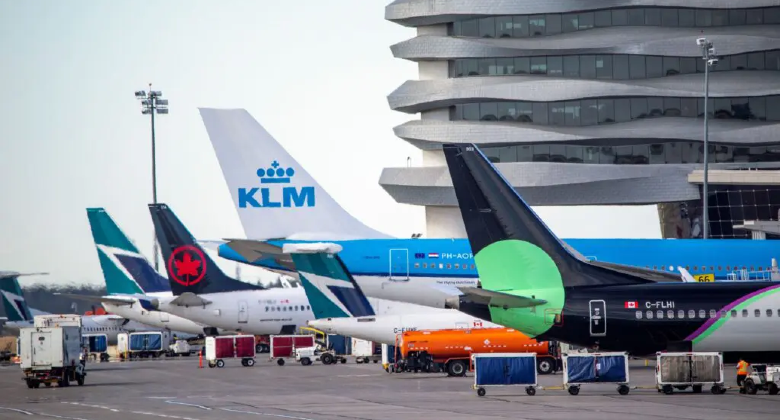
We position YEG as a growth airport with no slot constraints, ample room for expansion, and a significant demand base without the competition of other major Canadian hubs. While Calgary is nearby, YEG serves a distinct central and northern market and gives travellers a convenient alternative to driving one of Canada’s busiest intercity corridors, particularly during Alberta’s winter conditions and peak construction season. Just as importantly, YEG offers a seamless passenger experience, with shorter travel times to the gate, easy terminal navigation, efficient processing, and a less congested environment than larger gateway airports. For airlines, that translates into strong local demand, operational flexibility, and significant opportunities for long-term growth.
We’re also proud of the focus we put on demand development and sustaining routes. With an in-house demand development team, we consider our air service team an extension of the airline partners’ sales teams, providing support beyond marketing with corporate and leisure account prospecting, sales events and trade missions, and travel agent engagement. We work hard with our airline partners to earn each route launch, and work equally hard at ensuring it remains successful well past the inaugural flight.
Click Here to find out more about the opportunities at YEG in the Air Service One Airport Media HUB
