RIX Riga Airport
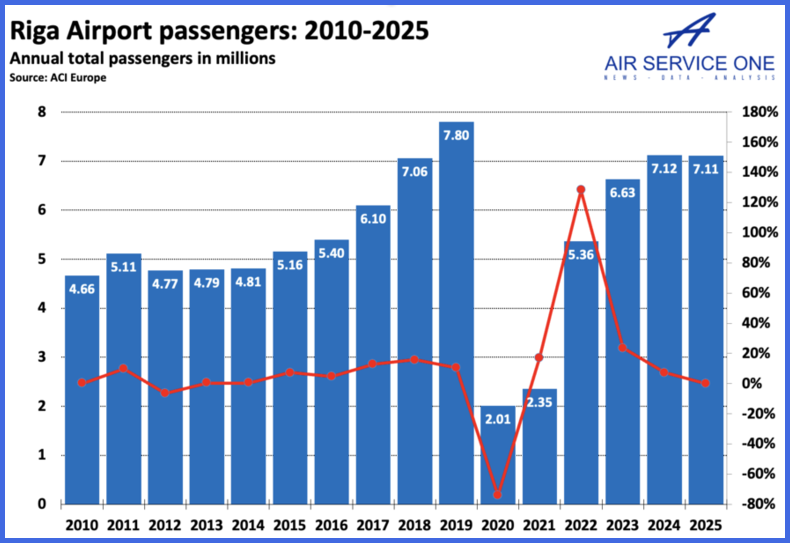
Riga Airport is the busiest in the Baltics, handling 7.1 million passengers in 2025, broadly unchanged on the previous year. Of these, 5.7 million were direct passengers, while 1.4 million, or around 20%, used Riga as a transfer point. Setting Riga apart from the other Baltic capitals is its status as an air hub, resulting in an extensive route network and connectivity, with destinations and frequencies structured to support connecting traffic.
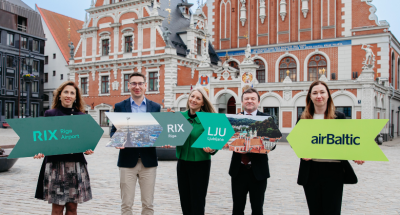
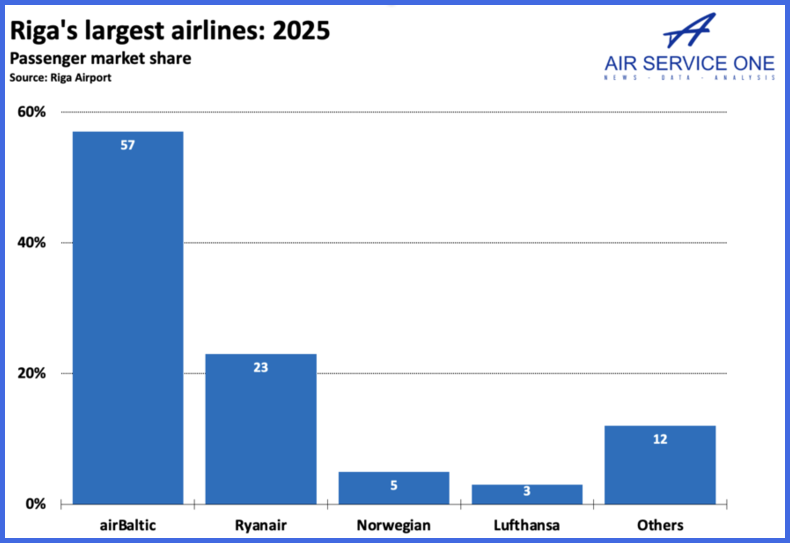
airBaltic, which is based in the Latvian capital, remains by far the airport’s largest carrier, accounting for 57.2% of Riga Airport’s passenger market in 2025. The airline continues to operate an extensive network from its home base, connecting Riga with destinations across Europe, the Middle East, North Africa and the Caucasus.
Riga Airport also has a strong low-cost presence. Ryanair, which opened a base in the Latvian capital in 2021, is the airport’s second-largest carrier, accounting for 22.8% of the passenger market in 2025. Norwegian has also expanded its operations from Riga, while the airport’s low-cost offering is complemented by a broad range of leisure services. Overall, Riga Airport’s scheduled passenger flight programme increased 11% year-on-year during the 2026 summer season, while available seat capacity grew by 7%.
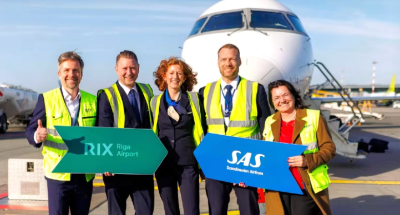
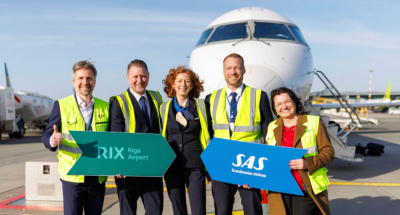
The airport also maintains services by a range of foreign full-service carriers, including Aegean Airlines, Finnair, LOT Polish Airlines, Lufthansa, SAS, Turkish Airlines and Uzbekistan Airways. SAS returned to Riga in 2026, while increased frequencies from several network carriers have further strengthened access to major European hubs. Riga Airport sees further potential to expand this segment as it seeks to broaden its connectivity beyond the strong presence of airBaltic and low-cost operators.
North America and Asia remain significant markets with potential for expansion. Up until 2018, the airport had a nonstop service to New York JFK operated by Uzbekistan Airways, which successfully utilised Riga as a stop on its flights to the Big Apple for 14 years. The delivery of longer-range aircraft resulted in the carrier commencing nonstop operations from its Tashkent hub to the States instead. As a result, more than 230,000 passengers per year fly between Riga and North America via other points.
Riga Airport has entered a major new phase of infrastructure development. In September 2026, preparatory construction works began on the next stage of the passenger terminal expansion project. The development will include a new check-in hall, passenger waiting areas, an enlarged security screening zone and baggage reclaim facilities, alongside upgraded roads, parking areas and other external infrastructure. The overall project scheduled for completion within 42 months.
The expanded terminal will have capacity to handle up to twelve million passengers annually. Its development is being coordinated with the Rail Baltica project, which will integrate the airport into the Baltic and wider European rail network and provide a direct rail connection with central Riga.
Tourism Board Info
Tourism in Riga, Latvia: A Growing Destination for Airline Route Development
Riga, the capital of Latvia, is rapidly becoming a key destination for international tourism in Northern Europe. With its rich history, vibrant cultural scene, and strategic location, Riga offers significant potential for airlines looking to expand their routes.
As one of the most well-preserved medieval cities in Europe, Riga boasts a UNESCO World Heritage Old Town, featuring cobblestone streets, Gothic spires, and beautiful Art Nouveau architecture. The city attracts history and architecture enthusiasts, offering a perfect blend of the old and new. Its fascinating history is further reflected in museums, galleries, and cultural landmarks that draw visitors year-round.
In addition to its historical and cultural appeal, Riga has developed into a popular destination for city breaks, with modern shopping centers, lively nightlife, and a burgeoning food scene. The city’s blend of traditional Latvian cuisine with contemporary influences is a highlight for many visitors, making it an exciting culinary destination.
Riga’s well-connected international airport, RIX Riga Airport, serves as a hub for flights across Europe and beyond, make it a prime location for expanding air travel. The airport is the central hub in the Baltic region and has seen increasing passenger traffic in recent years. With ongoing investments in infrastructure and improved connectivity, RIX offers excellent potential for new airline routes.
The city also benefits from Latvia’s growing reputation as an eco-tourism destination, with nearby natural attractions like Jurmala Beach, forests, and nature reserves, further diversifying Riga’s tourism offering. The growing number of tourists from different regions presents airlines with lucrative opportunities to tap into an expanding market.
For airlines considering new routes, Riga offers both historic charm and modern appeal, making it an increasingly attractive hub for European and international tourism.