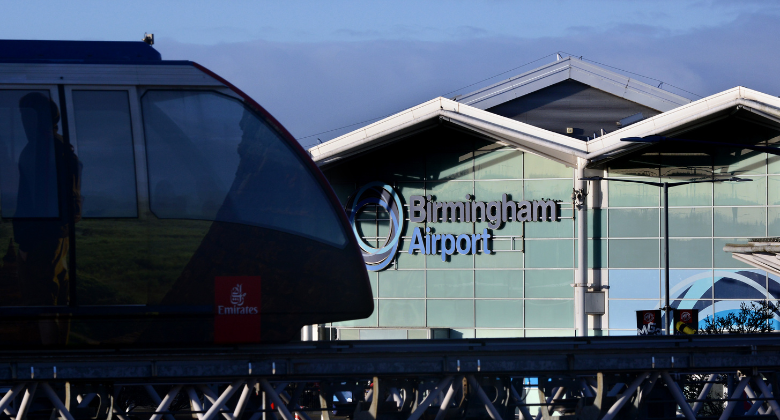
Birmingham Airport invests for growth
Birmingham Airport is a pivotal hub serving the UK’s second largest city. With over 13 million passengers handled during 2024-25, it is set to exceed this with around 14 million expected during this financial year and a planned trajectory to handle 18 million passengers by 2033.
To ensure it provides the best level of service to its passenger goal, of both 2025 and 2033, the airport is investing £76.5 million in capital investment, this financial year alone. This investment, the airport’s biggest in a 12-month period, focuses on asset replacement, enhanced passengers experience, capacity growth and environmental improvements.
Major projects include new retail and hospitality offerings, alongside new lounges and terminal refurbishments offering more space and choice. Arrivals areas are being developed to improve baggage capability, alongside the reconfiguration of Immigration Halls providing extra capacity for customers and future proofing for additional E-gates to complement the existing.
Whilst terminal upgrades are important, significant development works are underway on the airfield with maintenance works on the runway and taxiways and the expansion of stand capacity for more aircraft parking.
These developments are in addition to the next generation security lanes that were installed in 2024 at a cost of £60 million, with a further two recently installed to cater for 2025 and beyond. This resilience measure has been introduced following the reduction to 100ml last summer, at an investment of £5 million. Today, these nine lanes have the capacity to screen up to 3,600 passengers per hour during peak with further increases expected in the future.
In addition to improvements to passenger experience, investment is also being made to meet the Airport’s target of being net zero by 2033. No easy task for an airport that has over 35 airlines operating 144 direct destinations; however, a significant step has been made by installing 12,000 solar panels, costing £10 million, and these have already saved over 500 tonnes of carbon from being emitted since 2024.
As the airport spends over £1.5 million per week on capital investment in its facilities it really is on its way to accommodate its future growth, both sustainably and responsibly for its people, passengers and partners.