

Cologne Bonn Airport reshapes its future with new incentives and infrastructure
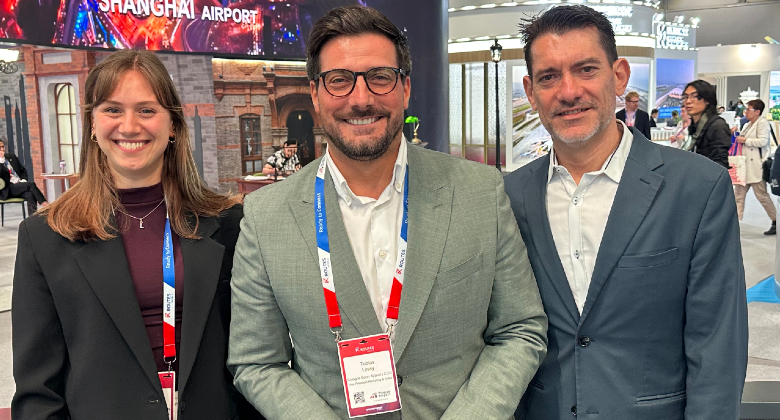
Cologne Bonn Airport has entered the winter season with fresh momentum, highlighted by the return of Wizz Air and the launch of a revamped incentive scheme designed to cut airline costs and drive growth. Speaking to Air Service One, Tobias Lyssy, Vice President Marketing and Sales at Cologne Bonn Airport, outlined how the airport is positioning itself as a cost-efficient, passenger-friendly alternative in Germany’s competitive aviation market.
Wizz Air makes its comeback
This winter marks a significant moment for Cologne Bonn Airport as Wizz Air returns to the market. The low-cost carrier, which suspended operations from the airport last year, is back with four routes, more than it operated before its withdrawal.
“Getting Wizz Air back was one of our top priorities,” Lyssy explained. “They’ve introduced four routes from this winter onwards, which is more than we had when they exited. It’s big for us, and we definitely see further potential for next summer.”
The airport is targeting Eastern Europe as a major growth region, with Poland, Romania and Bulgaria highlighted as key opportunities. “We definitely see potential in the Eastern European market in general,” Lyssy added.
New incentive scheme: lower costs, bigger opportunities
To reinforce its appeal, Cologne Bonn has unveiled a completely revamped incentive scheme which will come into effect in Jan 2026. Valid for three years, the scheme is designed to attract new carriers, maintain existing traffic and encourage growth.
“We basically revamped our incentive scheme completely,” Lyssy said. “It gives our partners an appetite to either come to Cologne, to maintain their business, or even grow. With costs being one of the biggest issues in Germany, we believe this is the right way to secure our piece of the pie.”
Germany’s aviation market has been slow to return to pre-pandemic levels, with domestic travel in particular lagging. Lyssy acknowledged that the environment is competitive. “It’s a fight for market share at the moment,” he said. “But with our investments and the reduction in costs for airlines, we believe we’re taking the right steps.”
Major infrastructure overhaul
Cologne Bonn has embarked on an ambitious modernisation programme. “We kicked off huge investments,” Lyssy said. “We are currently doing a complete renovation of Terminal 2, which will become the non-Schengen terminal. It will feature a new shopping concept and a new passenger experience concept.”
Once that work is complete, the same modernisation will be rolled out to Terminal 1, the Schengen terminal. Another critical investment is in security infrastructure. This year, the airport took over responsibility for security from the federal police, following the example of Frankfurt and Berlin.
“The equipment we had was no longer the standard,” Lyssy explained. “We wanted to improve the passenger experience and throughput. This will materialise next year.” Importantly, the changes will reduce costs: “Our security fee is currently 14.00 euros per departing passenger. From next year, we will go down to 9.90 euros. This is huge for our partners.”
Mid-haul operations growing
While Cologne Bonn has experimented with long-haul flights in the past, Lyssy is pragmatic about where the airport’s strength lies. “If you can offer long-haul flights, you are playing Champions League,” he said. “But for us, our bread and butter is medium- and short-haul business.”
That said, demand for services to the Middle East is strong, with direct flights to Jeddah and Dubai performing well. Frequencies to both destinations have increased this winter. But to fully position itself for intercontinental traffic, the airport recognises the need for infrastructure upgrades.
“At the moment you are not able to connect in both terminals with transit without a visa,” Lyssy explained. “By Q4 this year we’ll be ready to have seamless travel in both directions, which is crucial for future intercontinental growth.”
Cologne Bonn competes with cost and convenience
Cologne Bonn faces strong competition from nearby hubs such as Frankfurt and Dusseldorf, but Lyssy stressed that the airport has unique strengths. “It’s a combination of two things: cost and product,” he said. “When everything is ready, we will have one of the most state-of-the-art security controls and a very good passenger experience compared to bigger airports where you might face more hassle.”
The airport’s 24/7 operation and availability of slots provide additional advantages. “Slots might be an issue at bigger airports, but that’s usually no issue here,” Lyssy pointed out. “You can have the latest inbound in Cologne rather than at other airports.”
The airport’s strategy is also getting a boost from a new leadership appointment. From 1 October, Mark Cali joined as Head of Business Development and Airline Marketing. “I’m very much looking forward to starting afresh with the new structure and helping build the airline sales and route development division,” Cali said. “Together with the team, we hope to have a positive impact on the overall situation in Cologne.”
Lyssy welcomed the appointment, highlighting Cali’s strong background in tour operations and leisure travel. “Leisure and tour operator business is very important for us,” he noted. “We’re confident Mark will help us be even more competitive in this area.”
By combining modern infrastructure, reduced airline costs, a redesigned incentive scheme and strengthened airline relations, Cologne Bonn Airport is positioning itself as a cost-efficient, passenger-friendly hub ready to compete in Germany’s crowded aviation landscape.
