

Faro at 60: more than ten million reasons to rethink the Algarve

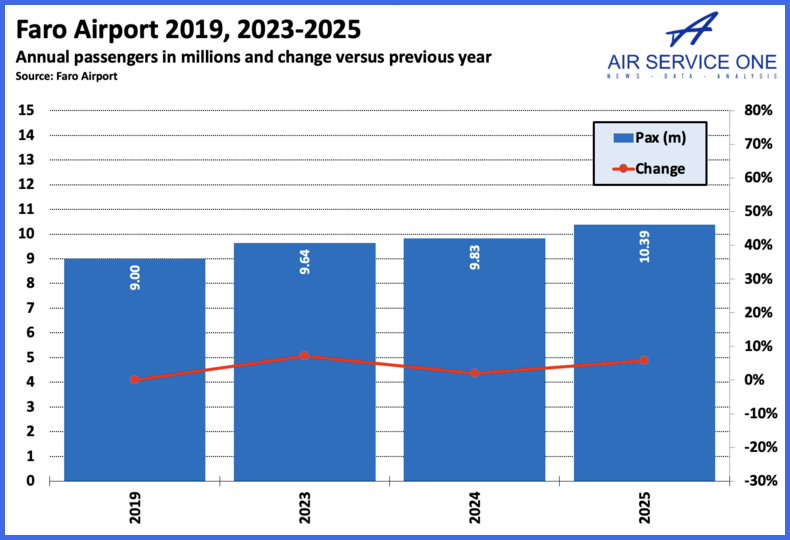
Faro Airport (FAO) registered its busiest year on record in 2025 by surpassing the ten million passenger mark. The result was achieved as the airport celebrated its 60th anniversary.
The strong figures reaffirm the Portuguese airport’s status as the seventh largest in the Iberian Peninsula by international passenger volume. It also highlights the Algarve’s evolving role in European aviation.
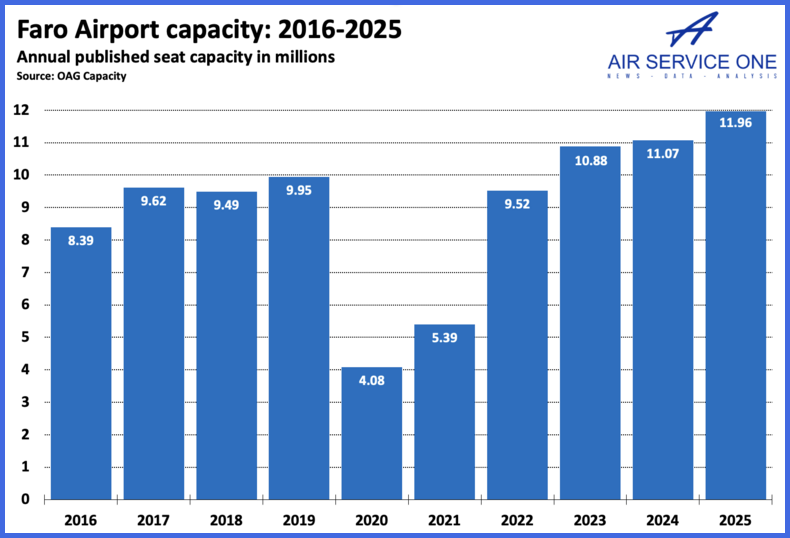
FAO closed 2025 with more than 10.39 million passengers, setting a new historic record compared to its 2019 benchmark of roughly nine million. This milestone reflects a wider transformation underway in the Algarve’s tourism profile, increasingly shaped by long-stay winter travel, premium leisure demand and event-driven traffic.
Faro Airport serves as a critical economic gateway for one of Portugal’s most internationally oriented regions. In 2025, the Algarve accounted for 29% of all international overnight stays in Portugal, ranking second nationally behind only Lisbon.
Against that backdrop, FAO surpassing ten million passengers and expanding winter capacity so robustly reinforces its role as the primary aviation engine for the region’s tourism economy.
Winter revolution
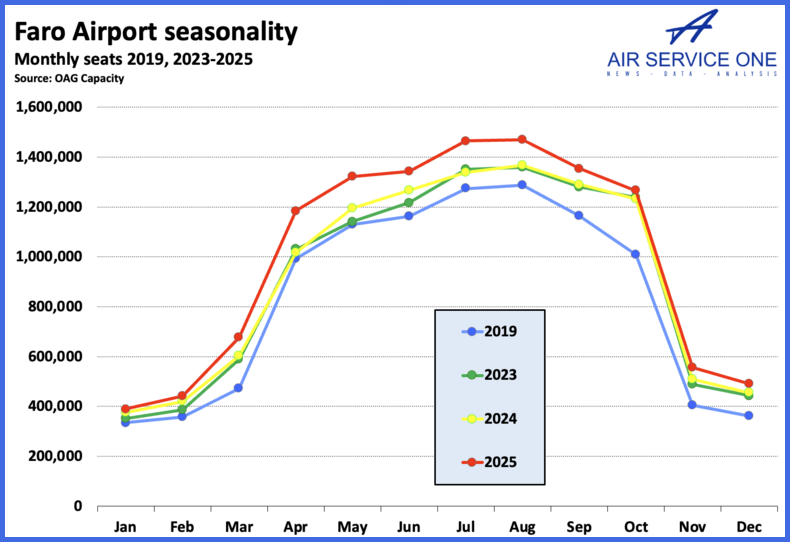
One of the most important developments at Faro over the past several years has been the pace of de-seasonalisation. Summer remains the backbone of the airport’s performance, but the strongest momentum is now concentrated in winter and the shoulder months, a period FAO describes as the “Off the beaten season”.
The change is visible when comparing seasonal capacity against the pre-pandemic baseline: seat capacity in winter 2025 was 50% higher than winter 2019, making it the airport’s strongest winter on record, while summer 2025 seat capacity was up 17% compared to 2019.
The shift is not only about more seats, but also about network depth and choice during the colder months. In winter 2019, the Algarve was served by 19 airlines across 57 airports. By winter 2025 this had expanded to 21 airlines and 62 airports.
This growth in winter connectivity signals increasing confidence from carriers in the market’s year-round potential and points to the Algarve’s ability to support a broader mix of travel patterns, including higher-spend segments outside the traditional peak season.
While the “Sun & Sea” legacy remains a cornerstone, the Algarve’s structural shift is powered by a robust year-round offering. Recognized as one of Europe’s leading golf destinations, the Algarve recorded in 2024 close to 1,5 M rounds played (+5% vs 2023). Moreover, 61% of this volume was concentrated in the winter and shoulder months (January-March and September-December), providing a passenger base during traditional “off-peak” times.
Additionally, the region’s beautiful nature supports growing demand for active travel, featuring over 1,000 km of certified walking trails and the 18,000-hectare Ria Formosa Natural Park, which hosts 250 different bird species.
Diversifying the DNA: beyond low-cost dominance
Low-cost carriers remain central to Faro’s connectivity model, with Ryanair, easyJet and Jet2 continuing to provide the bulk of capacity and frequency. However, the airport’s longer-term strategic emphasis is clearly shifting toward diversification, particularly through the expansion of full-service carriers and the development of long-haul links that can reshape the destination’s passenger profile.
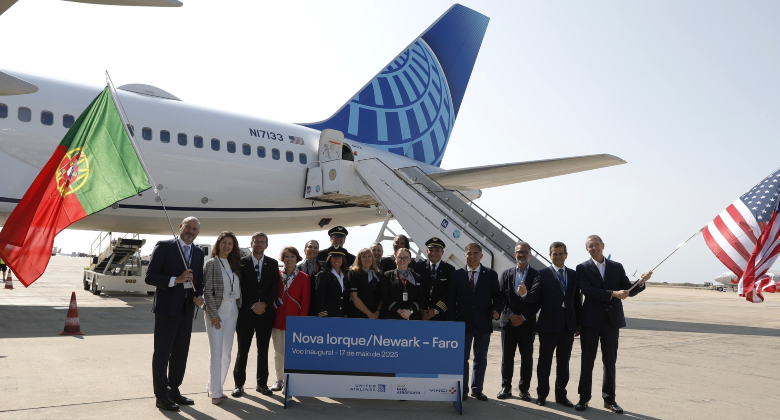
The most significant step in this direction has been the strengthening of transatlantic connectivity. The presence and performance of United’s Newark service and Air Transat’s Toronto link have tapped into high-yield North American demand and helped reposition the Algarve as more than a short-haul sun-and-sea destination.
This long-haul growth is complemented by steady gains among legacy carriers. Winter seat capacity comparisons between 2019 and 2025 show Air Transat capacity up 107%, British Airways up 87% and Lufthansa up 92%.
Regarding destinations to and from FAO, while the UK remains the airport’s dominant market, holding a 44% seat share, Faro’s figures suggest a destination steadily reducing its dependence on a single seasonal peak and broadening its relevance beyond its traditional base.
This aligns with broader developments in the region, where demand is being stimulated not only by traditional leisure travel but also by luxury tourism and international events such as PGA tournaments, World Superbike Championship, Equestrian Classic Tour, World Sailing Championship, MotoGP, and Formula 1. In 2026, the Algarve is expected to welcome over 647.000 spectators, drawn by a continuous calendar of world-class competitions and festivals.
Network expansion and summer 2026 outlook
Faro’s record-setting performance in 2025 is now feeding directly into its forward-looking summer strategy. For summer 2026, the airport is positioning itself to build further momentum in Central and Northern Europe.
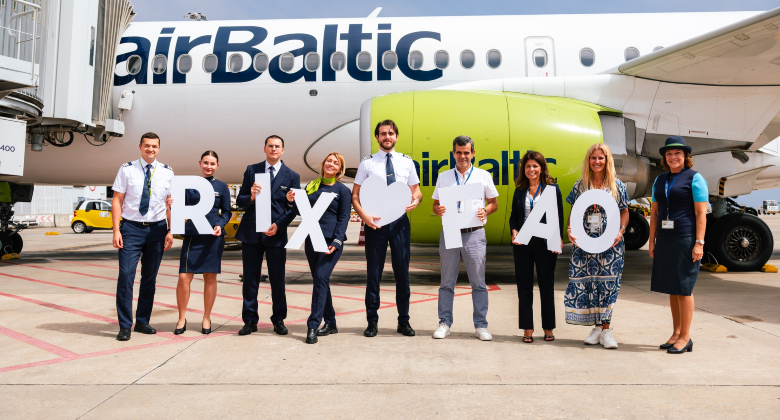
Two new routes, to Bucharest and Katowice, are planned, while seven new services including Warsaw, Riga and Reykjavik will collectively add more than 280,000 seats to the market.
