


Groningen Airport Eelde offers growth opportunities for airlines seeking to expand in the Netherlands
Serving the Northern Netherlands, located 200 kilometres north of Amsterdam, Groningen Airport Eelde (GRQ) has a unique, fully autonomous catchment area, home to two million inhabitants within a 60-minute drive and up to four million within a 90-minute drive.
Unlike Amsterdam, Rotterdam, and Eindhoven, Groningen is not slot-restricted and has the capacity to accommodate the growth ambitions and potential present on the Dutch market.
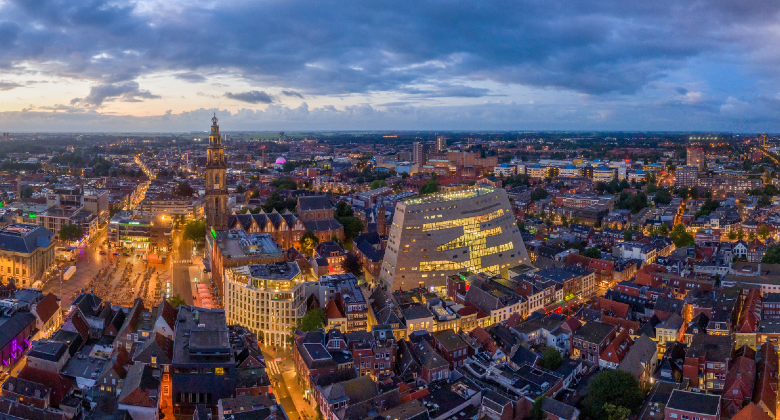
The airport is easily accessible and is located just a 15-minute drive from Groningen, which is considered the most innovative and happiest city in the Netherlands, with a population of 240,000. With its 65,000 students, of which 12,500 are foreign, Groningen is a lively, young and international city.
Current traffic and route opportunities
Most of the passenger traffic at Groningen Airport in 2025 consists of seasonal holiday charter flights, with airlines including Corendon, TUI, SKY Express, Emerald Airlines, Blue Islands, and Transavia operating flights to popular destinations in Spain, Turkey, Greece, Ireland, Sweden, and Guernsey.
The airport aims to expand its scheduled connectivity, focusing on leisure, Visiting Friends and Relatives (VFR) and business destinations, with the main drivers of business travel being the oil and gas, renewable energy, shipbuilding and shipping, agribusiness and life sciences and health sectors.

Prior to the Covid pandemic, scheduled services to London (up to 3-daily), Copenhagen (2-daily), and Munich (daily) were offered, and these route opportunities are still highly sought after by travellers and businesses from the region, alongside services to Riga and Dublin. Additional routes with high potential include those to the Spanish mainland, Italy, Greece, and short-break destinations such as Krakow, Budapest, and Prague.
Sustainability
Furthermore, the airport is a hub for innovation and sustainability in aviation. It is home to the world’s first solar park installed at an active airport. With over 63,000 solar panels (22 MW), the airport is largely self-sufficient in its electricity needs and powers 6,200 surrounding households.
GRQ is also developing a hydrogen ecosystem focused on green hydrogen production, storage, and use for airport operations and regional partners. GRQ also plays a key role in education, providing a hands-on learning environment for students from organisations based at the airport, like the KLM Flight Academy, Noorderpoort and Alfa College through its NXT Airport program.
