Manchester-Boston Regional Airport accelerates recovery

Manchester-Boston Regional Airport in New Hampshire has entered the summer 2026 season with renewed momentum, following its strongest post-pandemic performance and a year that has firmly set the stage for future growth.
In 2025, the airport handled over 1.38 million passengers, representing an almost 9% increase year-on-year and marking its highest throughput since 2019.
This rebound marks a turning point in its post-pandemic recovery and reflects growing confidence among both airlines and travellers in the New Hampshire and Northern Massachusetts market.
Beyond passenger recovery, the airport delivered a standout performance in cargo. In 2025, it processed over 238 million pounds of freight, the highest volume in its history, reinforcing its position as one of New England’s key logistics gateways. The presence of major operators such as Amazon Air, FedEx and UPS continues to support this segment, providing a strong and diversified revenue base.
Network evolution regains traction
The airport’s improving performance has been closely tied to the gradual rebuilding and diversification of its route network. In recent years, Manchester-Boston has focused on restoring core domestic connectivity while targeting high-demand leisure markets.
At the same time, carriers have continued to strengthen links to Florida and other leisure destinations, which remain central to demand from the airport’s catchment area.

The arrival and expansion of Breeze Airways has also played an important role in stimulating growth. The carrier has introduced routes to destinations such as Orlando, Fort Myers and Charleston, while continuing to expand its footprint with additional services including Raleigh-Durham in 2025 and Myrtle Beach in 2026.
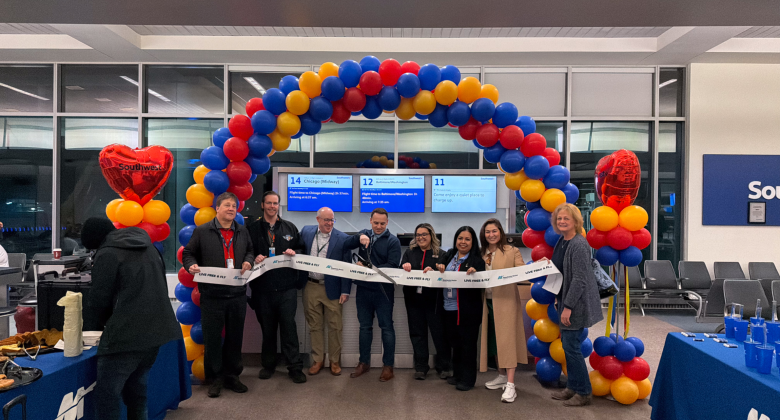
Meanwhile, Southwest Airlines remains the airport’s largest carrier and continues to provide backbone connectivity across key domestic markets, with further network development planned, including new service to Nashville starting in late 2026.
Manchester-Boston’s resurgence has also been supported by its underlying infrastructure and operational advantages. The airport benefits from unconstrained capacity, competitive operating costs and easy surface access, making it an attractive alternative to congested hubs in the region.
The airport continues to leverage its role as a secondary gateway to the Boston metropolitan area, offering a more convenient substitute while still serving a sizeable two-state catchment area.