


Milan Bergamo Airport accelerates growth with new routes, airlines and infrastructure
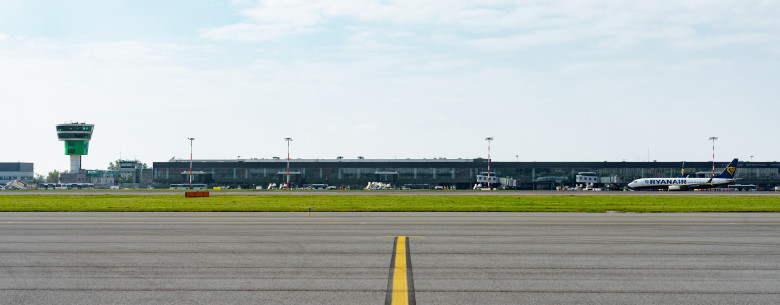
Northern Italy’s Milan Bergamo Airport (BGY) is undergoing another phase of expansion during the ongoing 2026 summer season, with a notable increase in available seat capacity, a raft of new routes, and continued investment in on-site infrastructure aimed at strengthening its long-term competitive position.
Over the summer 2026 season, Milan Bergamo Airport will offer travellers over 13.2 million seats on scheduled air services, an increase of 11.5% compared to the previous year. The figure represents an additional 1.3 million seats compared to last year.
Network expansion broadens reach
A key driver behind the growth is the introduction of a diverse set of new routes, spanning both European and long-haul markets.
Among the additions are services to Skopje, Oradea and Târgu Mureș by Wizz Air, as well as Skiathos and Rabat by Ryanair. Furthermore, Billund has been added to the network by Norwegian, Yerevan by FlyOne Armenia, Tashkent and Urgench by Qanot Sharq, and Kuwait City by Jazeera Airways.
The latter three represent new entrants at Milan Bergamo Airport, whose arrival not only increases connectivity but also enhances competition across several markets, particularly on routes linking Italy with Eastern Europe, the Caucasus and the Middle East. This diversification reduces reliance on any single carrier segment and gives travellers more options.
This mix of airlines reinforces Milan Bergamo Airport’s traditional leisure flows within Europe, while also tapping into underserved ethnic and emerging long-haul markets. The addition of Central Asian destinations in particular signals a growing diversification of the airport’s network beyond its established core.

Infrastructure developments gather pace
Parallel to network growth, BGY is advancing several key infrastructure projects designed to support rising passenger numbers and improve the overall travel experience.
The airport has already introduced improvements to passenger processing, with new security checkpoints opened in November 2025 making the management of security flows smoother and more efficient. This has been further facilitated by the introduction of new screening technology, allowing electronic devices and liquids in containers of up to two litters to remain inside passengers’ hand luggage.
One of the most notable developments is the continued expansion of the airport’s landside offering, including the planned opening of a new 4-star Hilton Garden Inn Bergamo Airport, scheduled towards late 2026 and early 2027.
The addition of an on-site internationally branded hotel is expected to enhance the airport’s appeal for both business and transit passengers, while also supporting early morning and late-night flight operations.
In addition, work is ongoing on a new railway connection, which is scheduled to come online next year. Once completed, the rail link will significantly improve accessibility to the airport, with journey times of just forty minutes from Milan’s city centre, while also enhancing connectivity to “surrounding areas” such as Como and Monza, reducing reliance on road transport and aligning with broader sustainability goals.
As competition among regional airports intensifies, particularly from nearby Milan hubs, BGY’s strategy of network expansion with targeted infrastructure investment is ensuring its continued growth.
