


Steady traffic growth seen in Asia Pacific and North Asia regions, where transparency of slot allocation remains essential

Xingquan (Max) Xie, IATA’s Regional Vice President for North Asia and Asia Pacific (ad interim), shares his thoughts for the current state of the industry.
We are excited to welcome the 155th Slot Conference to Singapore as the airlines in the Asia Pacific and North Asia regions continue to see strong traffic growth in 2024. In the second quarter of this year, we saw RPKs increasing 14.8% YoY – nearly 50% higher than the global average of 10.1%.
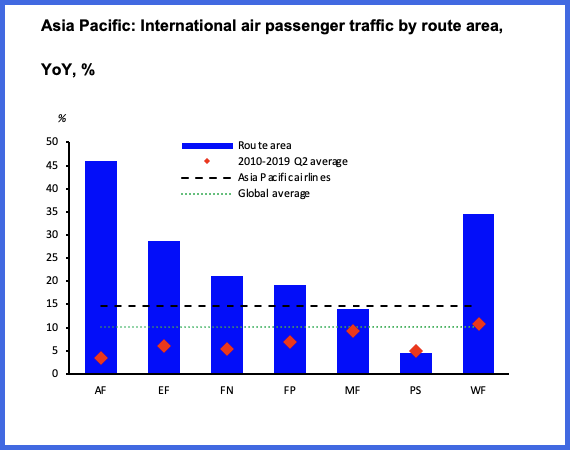
Strong performance on several key routes contributed to this growth, with YoY increases of 46% between Africa and Asia, 34% within Asia, and 29% between Asia and Europe. However, the overall traffic growth of Asia Pacific airlines in Q2 is significantly lower compared to the 30.9% YoY growth seen in Q1 2024, due to a drop in growth for all key routes. This includes traffic between the Southwest Pacific and the Americas which experienced only a 4% YoY growth in Q2 2024, much lower than the 17% YoY growth seen in Q1 2024 and also lower than the global average.

With over US$2 trillion forecasted for global airport development in the next two decades – over half in the Asia Pacific region – the airlines are keen to increase their operations across their networks.
However, some of the key concerns that continue to be highlighted are the lack of capacity at the airports and the lack of transparency in available capacity. Regulation exists to help manage insufficient airport capacity. In such cases, the World Airport Slot Guidelines (WASG) ensure that capacity is managed fairly, transparently, and efficiently. WASG can only work to maximum efficiency if implemented globally. IATA and its members advocate continuously with governments for closer WASG alignment. Particularly, efforts are being made in Australia, China, Indonesia, Malaysia, and Republic of Korea.
For 2024, airlines have asked IATA to focus on establishing Coordination Committees at several key Asia-Pacific airports, including in Australia, China, India and Singapore. To this end, we have been engaging with the respective regulators and airport authorities. We encourage them to establish such platforms which will include all operating airlines (and/or their representatives) using or planning to use the airport. The purpose is to review the coordination parameters on a seasonal basis and/or to review planned changes in policy or capacity, which could significantly affect coordination. Airlines’ participation and consultation are crucial to enable a fair and transparent process of airport slot coordination. We will continue our engagements with the industry partners at the slot conference in November and beyond.
I am optimistic about the prospects for the region in the coming year. But we must be prudent not to impose unrealistic and unmanageable operational requirements on airlines and airports in the region, as the region continues its positive momentum towards full recovery and further growth.
