The US domestic market is the world’s largest, but only half of the top 10 airports have grown in the past year
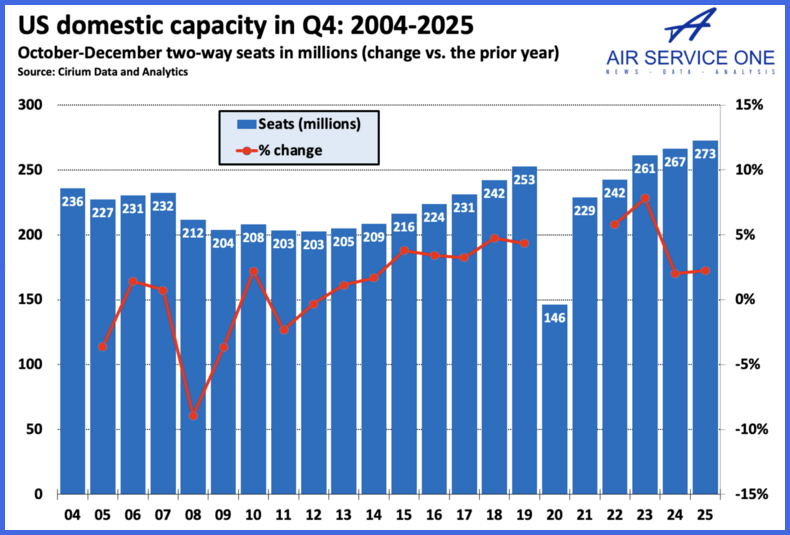
The US remains the world’s largest domestic market. According to Cirium schedule information for Q4 2025 (October-December), 273 million two-way seats are available. Capacity has risen by 2% compared to the same quarter last year, making it the best Q4 on record. Some 18% of the world’s seats are within the US.
American remains the largest domestic operator
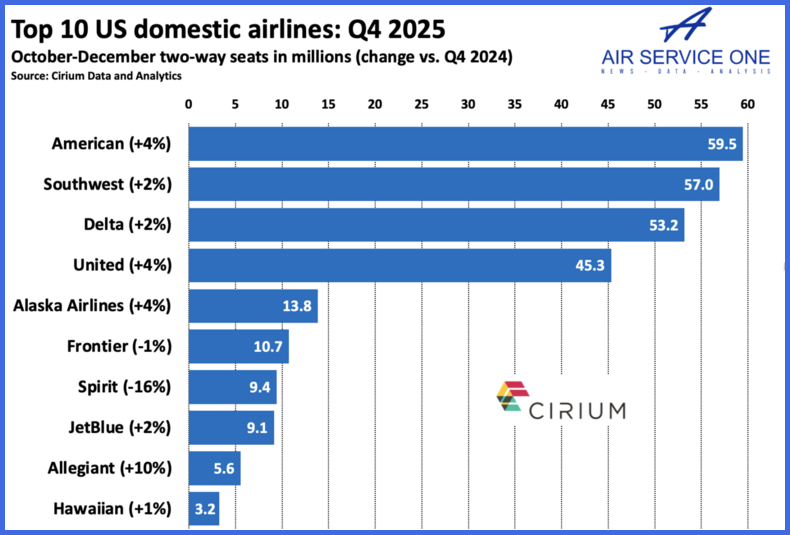
With 59 million seats, American is still number one. It always is, largely as it is the world’s largest airline in multiple respects. Surprisingly, its domestic capacity has grown by double the market’s average in the past year.
American has over a fifth of the US’s domestic seats on a network spanning over 880 routes. While revolving to a large degree around connectivity, Dallas DFW-Los Angeles, DFW-Miami, DFW-Phoenix, DFW-Las Vegas and DFW-Austin are its most-served domestic markets.
Eight of the top 10 airlines have grown since Q4 2024. Not so Spirit (-16%) and Frontier (-1%). Despite implementing many changes, including to its debt, investment levels and product, Spirit has entered bankruptcy protection for the second time in a year. Its cuts mean it is now the seventh-largest domestic operator, down by one place.The contrast with Allegiant (+10%) could not be starker.

Only half of the top 10 airports now have more domestic seats
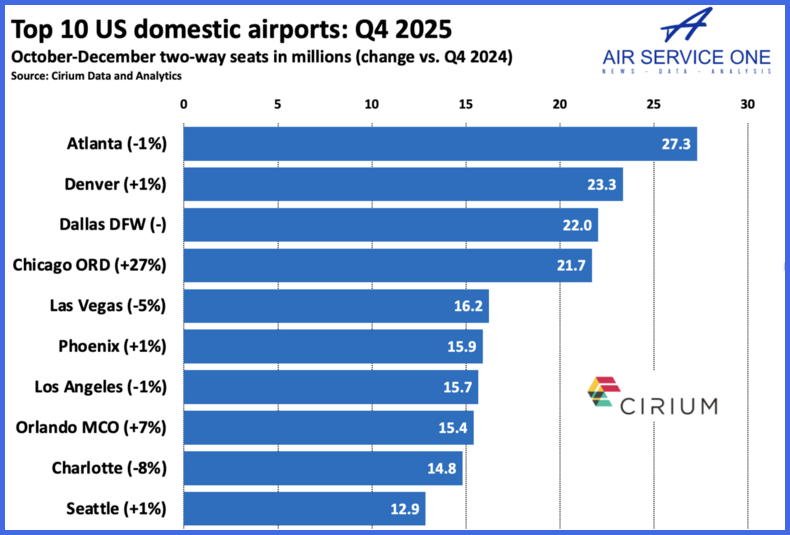
Only Denver, Chicago ORD, Orlando MCO, Phoenix and Seattle plan more domestic seats than they did in Q4 2024. However, Atlanta remains first, with Cirium indicating that 158 domestic airports are served. Compared to a year ago, these airports are now served: Anchorage (usually summer only), Bangor (last served in 2021), Fargo (2020) and Greenville (2020).
ORD capacity has risen by 27%, which is primarily due to both American (+27%) and, to a far lesser degree, United (+8%). American has added over 15 domestic airports to its ORD network, whether previously served or not. The airport has also welcomed Avelo and seen growth by some incumbents, particularly Frontier (+37%).
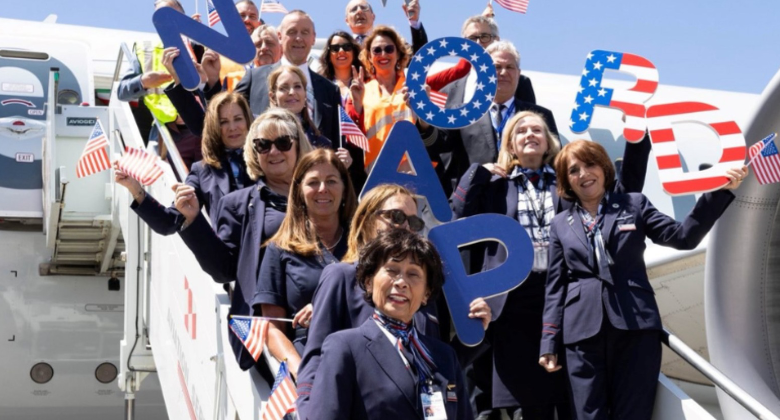
Perhaps because it may lose gates, American has been keen to show its commitment to ORD recently, which is its third-busiest domestic hub (but fourth overall). It was far less of a priority pre-COVID-19. Indeed, while the airline’s overall domestic offering is up by 4% compared to Q4 2019, ORD remains down by 5%.