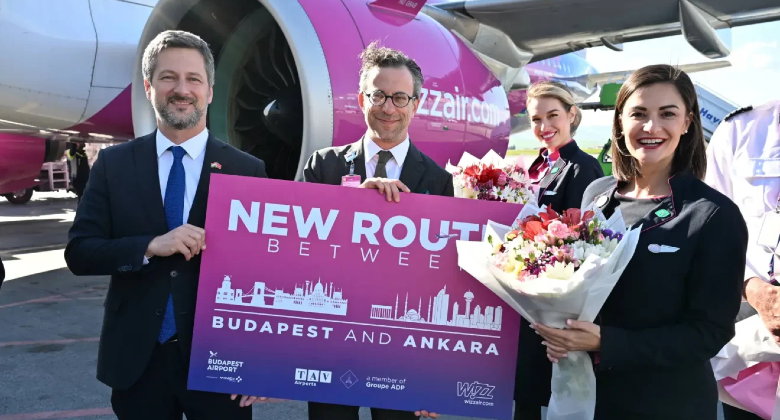
Wizz Air sees growth opportunity amid industry headwinds

Wizz Air believes the current aviation environment, marked by elevated operating costs and ongoing supply chain disruptions, could create a competitive advantage for the ultra-low-cost carrier as it prepares for a new phase of expansion.
Speaking to Air Service One at Routes Europe 2026 in Rimini, Wizz Air Network Officer Andras Szabo said the airline is regaining momentum as aircraft return to service and new deliveries continue, while its fuel hedging strategy and young fleet place it in a stronger position than some rivals.
Andras Szabo said: “For a very long time, the Wizz Air Group has had the ambition to grow significantly, democratise air travel and expand its footprint. This specific year is characterised by new aircraft arrivals, which are steadily coming from our order book, while we are also unparking some aircraft that were grounded due to the Pratt & Whitney inspection regime and powder metal issue. The combination of the two is driving underlying growth. We are also slowly but surely emerging from the Pratt & Whitney situation, which is fuelling growth to quite significant levels. As we unpark all the aircraft next year, you can expect our growth rate to be more in line with our pure order book profile.”
The airline has faced significant operational constraints due to the Pratt & Whitney GTF engine inspection programme, which impacted a portion of its Airbus narrowbody fleet, although Wizz now sees those issues easing while aircraft deliveries continue to support expansion.
Szabo said growth will primarily be concentrated across Wizz Air’s established markets.
He noted: “Generally, the growth is much more concentrated on our core network footprint. Italy is one of them. I would also highlight the Balkans, where we are growing significantly, as well as our core markets such as Poland, Hungary, Romania, Bulgaria and so on, without singling out one in particular. We are constantly recovering ground versus where we wanted to be had those aircraft not been parked. Obviously, don’t discount our business in the UK.”
Wizz Air also believes the current fuel cost environment could ultimately work in its favour.
“We see an opportunity in the current crisis. Obviously, in the very short term, it is challenging for the industry with these elevated input costs. However, if we look at it holistically, Wizz Air has multiple advantages. One is our hedging profile. We are one of the airlines that hedged significantly, but also the new fleet technology we have in large numbers is very helpful and beneficial in terms of the fuel bill. As we compete in an elevated fuel cost environment, the advantages of the Wizz Air Group become more apparent, allowing us to compete more efficiently across many markets,” Szabo added.
With airlines across Europe facing mounting cost pressure, Wizz Air is signalling that the combination of lower operating costs, fuel-efficient aircraft and renewed fleet availability could allow it to accelerate growth while competitors remain under strain.