Air Service one talks with Vancouver International Airport

As the 156th IATA Slot conference takes place in the beautiful destination of Vancouver, Canada, Air Service One had the chance to talk with the event host team at Vancouver International Airport to understand the drive behind its recovery post pandemic, the markets and initiatives it has identified to support that recovery and the infrastructure developments it is implementing within its modernisation program.
Vancouver International Airport came close to reaching its pre-pandemic passenger levels in 2024. What do you see as the key factors that drove this recovery, and what were some of the standout highlights or milestones for YVR during the year?
In 2024, Vancouver International Airport (YVR) welcomed 26.2 million passengers, marking a 5% increase compared to 2023. This growth was driven by gains across all sectors: domestic traffic saw a modest 0.3% increase, US transborder traffic rose by 9.7%, and international traffic climbed by 10.4%. Achieving our second-highest passenger count reflects the strength of our collaboration with airlines, tourism, and business partners in positioning YVR as a global hub.
Several new or returning services played a key role in this recovery. Air Canada launched its new service to Singapore and continued growing capacity on its newly introduced Bangkok route. WestJet launched new services to Detroit and Fort Lauderdale, while Porter Airlines added a new route to Montreal. Additional route launches included Flair Airlines to Guadalajara, American Airlines to Charlotte, and United Airlines to Washington Dulles. YVR also welcomed new entrant ZIPAIR with service to Tokyo, and Air China resumed its flights to Beijing.
The airport’s international profile was further strengthened by robust growth in Asia-Pacific traffic, which has surged nearly 50% compared to 2019, making it the highest such increase among peer airports across North America. A major driver of this success has been Air Canada’s continued development of its transpacific hub at YVR.
Has YVR identified any unserved markets to which it would like to establish connectivity?
We’re seeing growth opportunities in the Asia-Pacific region, which plays to our strength but also in Europe and the Americas, including opportunities to connect our province directly to central and South America.
Driven by strong demand and limited capacity, YVR’s current network clearly reveals where the next growth opportunities lie. Expanding our global connectivity in these regions is a key pillar of our strategy to position YVR as a major international hub. Meanwhile, YVR growth to Latin America has increased by more than 30% since 2019, marking the highest growth among top North American demand markets to the region.
Passenger demand for travel to Latin America grew by 14% year-over-year, the largest increase among West Coast and Canadian peer airports.
Have you observed any emerging passenger trends that are shaping expectations for the airport experience or inspiring new offerings in the terminal?
As airports continue to find new ways to enhance the passenger experience, they are prioritizing initiatives that set them apart in an increasingly competitive landscape. Today’s travelers seek a seamless, digital-first experience with a human touch.
YVR, which was recently named Best Airport in North America by the Skytrax World Airport Awards, has placed the passenger experience at the core of its operations. A standout addition in the new Plaza Premium First Lounge in the international terminal. This lounge complements existing facilities such as the SkyTeam Lounge and Air Canada’s Signature Suite, offering elevated comfort, personalized service, and versatile spaces for both business and leisure travelers.
In April 2025, YVR also launched a reimagined Vancouver Duty Free experience. This newly expanded retail space now covers 30,000 square feet, an increase of 7,000 square feet, and is designed to reflect both international luxury and British Columbia’s local character. The walk-through concept allows travelers to browse a blend of global brands and local favorites as they move from security to their gate.
Another forward-looking initiative is the introduction of autonomous self-driving pods. Developed in partnership with A&K Robotics and the Integrated Marketplace, these pods assist travelers in navigating the 650-metre stretch from the security checkpoint to the furthest boarding gates in International Departures. While moving walkways exist, the pods provide a valuable new layer of support, especially for travelers with mobility needs or time constraints.

How do you encourage existing carriers to upgrade from seasonal to year-round service?
At YVR, a cornerstone of our growth strategy has been TeamYVR. This is how we refer to our partnership approach to air service development, and this strategy adds significant strength to our business cases to airlines.
TeamYVR functions by aligning efforts in airline marketing, route development, and tourism promotion. It includes close cooperation with partners like Destination Canada, Destination British Columbia, Destination Vancouver, the Vancouver Hotel Destination Association, Tourism Richmond and Tourism Whistler. Together, we build structured campaigns that maximise the effectiveness of our outreach and optimise each partner’s contribution.
We’re also working with our Indigenous Tourism partners to explore various marketing and air service development opportunities to help boost Indigenous Tourism which is a fundamental component of Canada’s tourism strategy.
The alignment of our air service development goals with tourism and trade partners through a well-thought-out and structured model is important to us in supporting airline growth from our market.
Could you tell us more about the North Runway modernisation program and any other infrastructure developments at the airport?
Built in the 1990s, the North Runway requires upgrades to ensure the longevity and resilience of this critical piece of airport infrastructure. The paving and infrastructure work we are conducting on the North Runway will ensure it remains safe, efficient and ready for the future. However, as Canada’s second busiest airport and a vital platform of connection for our community and the economy that supports it, we need to ensure this important work has minimal impacts to our operations.
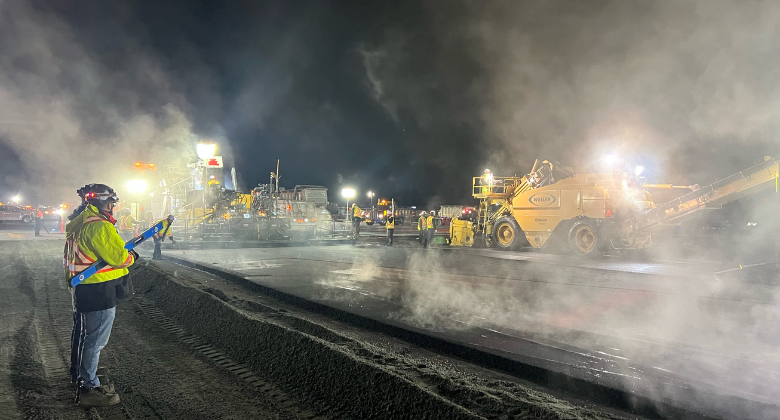
As such, work to deliver upgrades to the North Runway takes place during the runway’s standard nightly closure period of 10:00 p.m. to 7:00 a.m., ensuring that this work does not impact slots. Work is conducted in increments overnight with the runway returning to service each day.
The North Runway Program include: a complete asphalt overlay of the runway and connecting taxiways, drainage improvements, as well as electrical improvements and new LED lighting along the runway edge
Work on the North Runway Program started in April. after construction crews had completed key pre-construction activities, including setting up the airside laydown site, creating access roads, and conducting environmental testing around the construction site.
How does YVR position itself competitively to attract airlines, considering the proximity of other major airports in the Pacific Northwest?
YVR is located in one of the world’s most spectacular destinations and is geographically positioned to provide easy connections. YVR also offer passengers a seamless connection experience – largely thanks to our capital investment in our connection facilities. Passengers are able to connect to different sectors all under one roof and one building without the need to transfer to different terminals. YVR is also surrounded by both river and ocean waterways, with proximity to a major urban centre and an international border.
As such, YVR has the potential to evolve from being a world-class airport to a world-class intermodal travel hub – a place where air, road, rail and marine transportation converge in a way that sets new standards for efficiency and innovation. Outside of intermodality, YVR is leading the way in security innovation and seamless travel:
In 2024, YVR became the first airport in Canada to implement CATSA Plus Computed Tomography (CT) X-ray equipment at Checkpoint ABC North. This cutting-edge technology enhances passenger safety while streamlining the security screening process, setting a new standard for efficiency and convenience
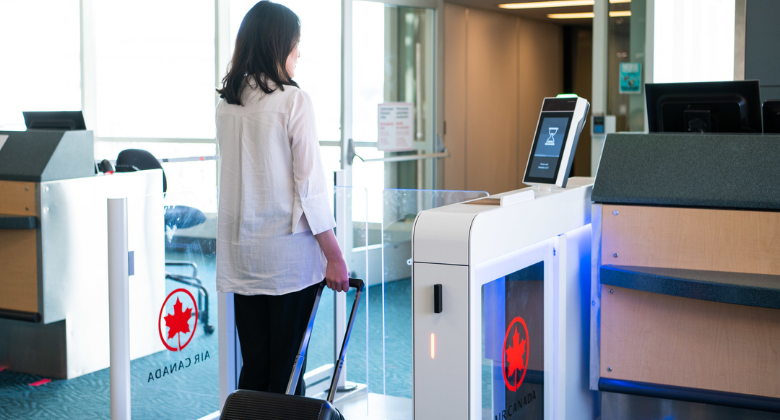
YVR has also collaborated with Air Canada to introduce a pioneering digital identification program – one of the first of its kind in Canada. This initiative underscores the airport’s commitment to leveraging technology to improve efficiency, enhance security, and create a smoother journey for travelers.
Lastly, as a 24-hour airport, YVR is open for business around the clock, ensuring flexibility for airline operations and seamless connectivity for travelers. While slot availability varies, YVR continues to have capacity during most times of the day, offering opportunities for airlines looking to expand their presence in Vancouver’s growing market.