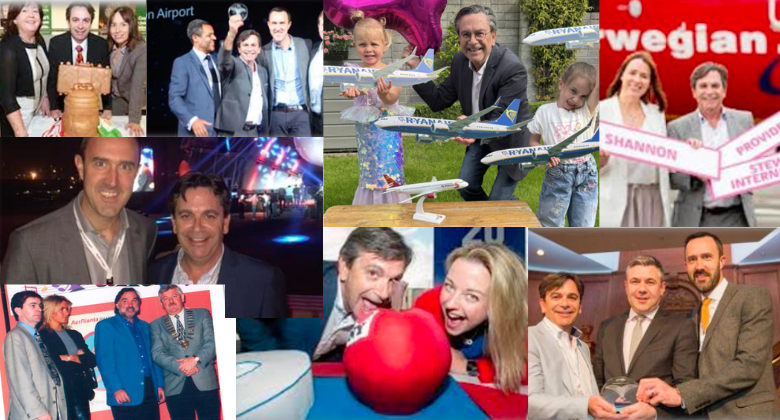
Declan Power: The man who helped Shannon keep reinventing itself

When Declan Power leaves Shannon Airport at the end of this year, he will bring to a close a career spanning more than 47 years. Few people have witnessed as much change at one airport; fewer still can claim to have played such a direct role in shaping its response.
Power joined Shannon in 1979 in a clerical role in the operations department. Within weeks, he was helping to manage the press centre for Pope John Paul II’s visit. Later came encounters with some of the defining figures of the era, including Fidel Castro, Ronald Reagan and Mikhail Gorbachev. They were reminders that Shannon, despite its location on Ireland’s west coast, had long occupied a place on the international stage.
Yet the most important part of Power’s career was not the history he witnessed, but the change he helped to drive. His path through operations, financial control and airport management gave him an unusually broad understanding of how an airport works. When he moved into marketing and aviation development, he brought with him not only an instinct for promotion, but a grasp of what airlines needed operationally and commercially.
That combination would prove crucial as Shannon’s role changed. The airport could no longer depend on the technical stops that had once made it an essential staging point for transatlantic flying. It had to become a destination in its own right and persuade airlines that Ireland’s west coast could sustain direct connectivity.
Power was at the centre of that transition. In 1990, he joined the newly created Shannon Airport Marketing, a small joint venture that gave the airport its first dedicated route-development capability. It was an era before online booking, when new services were built through travel agents, tour operators, consumer campaigns and painstaking relationship-building. The team developed outbound holiday programmes to Spain and long-haul leisure services to Orlando, Barbados, Jamaica and Mexico, while the establishment of AB Shannon created a locally based operation linking the airport with London Gatwick.
When Shannon assumed direct responsibility for its own route development in 1996, Power led an expanded marketing team with representatives across Europe and the United States. Passenger traffic passed two million for the first time, supported by new links including Newark, Los Angeles, Washington, Chicago, Toronto, Brussels and Frankfurt. By 2007, following the establishment of a six-aircraft Ryanair base and further expansion across Europe and North America, Shannon had reached a record 3.6 million passengers.
The numbers only tell part of the story. By 2023, Power had been involved in more than 160 route launches with 45 airlines. More important than any single launch was the network of trust behind them. Airlines open routes on the strength of commercial evidence, but long-term relationships determine whether an airport gets the opportunity to present its case, work through difficulties and try again when circumstances change. Power made that patient, personal form of aviation development one of Shannon’s hallmarks.
His influence also extended beyond the route map. He initiated and led the case for investment in a full US Customs and Border Protection Preclearance facility at Shannon. Opened in 2009 following an investment of more than €20 million, it was the first full US preclearance facility outside the Americas and remains one of Shannon’s strongest competitive advantages. Passengers can complete US immigration and customs formalities before departure, arriving in the United States as domestic travellers and making onward connections easier.
Perhaps the clearest measure of Power’s contribution, however, is found in Shannon’s difficult years. Traffic fell from 3.6 million passengers in 2007 to 1.3 million in 2012 as recession, improved road access to Dublin, airline cutbacks and the effects of EU-US Open Skies converged. The airport’s future required more than replacing individual routes. It demanded a different operating model.

Power was involved in restoring the Heathrow service, developing new regional links and leading the commercial team’s transition as Shannon became independent in 2013. The newly independent airport adopted a more flexible approach to airline incentives and market development, producing five consecutive years of growth. By 2018, passenger numbers had risen to 1.86 million, an increase of 34% since independence.
The pandemic brought another existential shock. Shannon remained open around the clock to facilitate vital cargo, including personal protective equipment, while using the period to complete a €17 million airport enhancement programme. The airport also moved early to give airlines greater certainty over operating costs through discounts and support. When travel restrictions eased, Shannon was positioned to recover quickly.
That recovery has since become sustained growth. Shannon handled more than 2.3 million passengers in 2025, up 9% on the previous year and 34% above 2019. It was the airport’s busiest year in 16 years and its fifth consecutive year of growth. Momentum has continued in 2026, with 1.17 million passengers handled during the first six months, an increase of 12%.
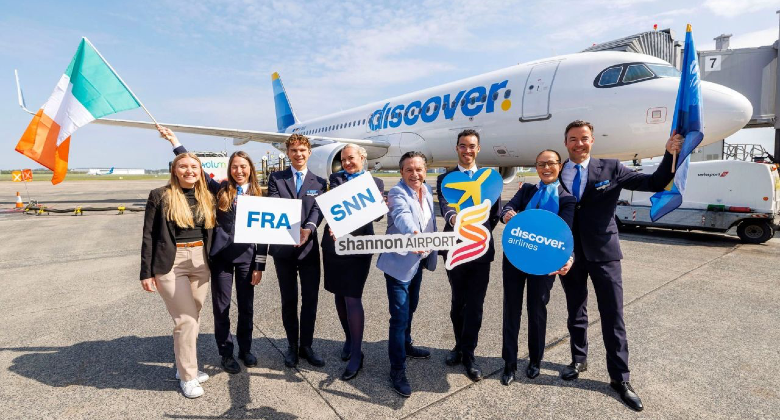
The airport now has 40 routes across Europe, the United Kingdom and the United States, its largest network in 17 years. A €40 million investment programme is also under way, covering upgrades to immigration and baggage facilities, taxiways and the terminal building.
No airport’s success belongs to one person, and Power has consistently credited the colleagues, managers and airline partners who supported him. That instinct is itself part of his legacy. His career demonstrates that aviation development is a team undertaking, built as much on credibility and persistence as on forecasts and incentives.
The most enduring achievement for an airport is to learn how to keep reinventing itself. Declan Power helped make that possible at Shannon.